|
Reviews 10-22-2009 |
Music Reviews |
|
Fly by Eric Harry
|
It seems that many artists who put out a
large body of work in a short period of time tend to repeat themselves
and often need to edit with a more critical ear. This is certainly not
the case with Eric Harry, who has composed and released eight albums
since he became a solo artist two years ago. The ten original tracks on
Fly are a combination of new age and new
classical music for piano (Eric Harry) and string quartet (The Toronto
String Quartet), and while the music is quiet and soothing, some of the
pieces are a bit more upbeat than The Language of Flowers and Away Melancholy, Away, demonstrating Harry’s versatility. Fly
begins with “I Am the Sea,” a gorgeous piece with the piano creating a
gentle, rocking rhythm and an elegant melody while the strings (mostly
cello) add a smooth flowing quality. Pure peace and tranquility! “My
Secret Muse” is lighter and more carefree, although the strings keep it
grounded. “Dance For Little Feet” has a Celtic tinge with Harry’s
fingers doing a happy dance around the piano keyboard while the strings
give a cinematic sweep. A piano solo later in the piece suggests that
the dancer is gradually slowing down, catching a second wind near the
end and picking up the tempo and strings once more - utterly charming!
“Skipping Stones” is fascinating. Harry uses tremolo on the piano to
convey stones skipping on water and the droplets of dancing water that
go along with them. It is not as melodic as some of the pieces, but it
paints a wonderfully vivid picture of the simple joy this activity
brings. The title track is a piece Harry wrote while he was in college.
A bit more ambient, the piano describes the effortless freedom of
flight while the strings make the piece soar. Love it! “Surrounded By
Sunflowers” has a bluesy gospel feeling that stands out from the rest
of the tracks without feeling out of place. Fun! “Cloudless” begins
with Harry plucking the strings of the piano - an edgier sound than
pizzicato on one of the stringed instruments. One of two piano solos on
the CD, it leaves me wanting to hear more of just the piano. “Next Time
Can I Dance With You,” the other solo, is a charming, heartfelt way to
close this excellent album. Soft-spoken and sincere, its innocence goes
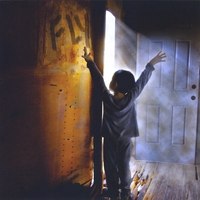
deep. More, Eric, more! Fly
is excellent from the sweet cover artwork of a little boy with his arms
in the air, ready to fly, to the closing piano chords. Truly a beauty.
Highly recommended! Reviewed by Kathy Parson's Mainly Piano website reprinted with permission on Ambient Visions |

|
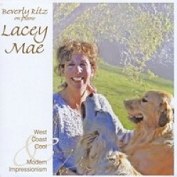
Lacey Mae by Beverly Ritz
|
Lacey Mae is the latest recording by Northern California’s Beverly Ritz. A blending of “west coast cool” and “modern impressionism,” Ritz’s nine solo piano tracks are made up of six jazz standards and three original pieces. The pieces are very different from each other, but Ritz gives them all a “cool” and relaxing treatment that creates a consistently pleasant mood from start to finish. Some of her unusual chord voicings add spice to her arrangements, but there are no jarring discordances or “acid” moments. Ritz begins with Freddie Hubbard’s “Little Sunflower.” Its gentle rhythm and languid pace set the tone of the album. The left hand creates the feeling of a lazy breeze that causes the “head” of the sunflower to dance along in an unhurried and carefree way. Rodgers and Hammerstein’s “My Favorite Things” has been turning up more frequently as a jazz piece, and its simple melody lends itself to a variety of treatments. Wistful and dreamy with a touch of bittersweet, this is one of my
favorite arrangements of this classic. “Lacey Mae” is the name of one of Lacey Mae is a great addition to your collection if you like jazz piano with more substance than traditional “smooth jazz” but that isn’t overly challenging to the listener. Recommended! Reviewed by Kathy Parson's Mainly Piano website reprinted with permission on Ambient Visions |
|
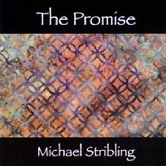
The Promise by Michael Stribling
|
Michael Stribling’s latest release, The Promise, is a musical exploration of life’s transitions and changes using the medium of electronic instrumentation and a combination of melodic and ambient music. Stribling’s previous releases have been award-winning chart-toppers, and I would expect the same for The Promise. Stribling founded his label, Leela Music, with the mission of helping others “in their journey toward wholeness through the gift of music, by creating works that inspire and uplift the human spirit”; he has more than succeeded in his mission. Stribling is an artist who has had a wide range of musical experiences, ranging from being Johnny Mathis’ percussionist to being a disc jockey to composing and recording his own music to creating a new internet radio station (free-new-age-music-and-more.com). Those experiences (and many others) enrich his music and give him a unique and distinctive musical voice. The Promise begins with “Bright New Day,” a piece that exudes hope and optimism. Rhythmic and upbeat, it’s an inviting start. “Daily Living” sparkles with joy, yet there is a sense of tension and urgency underlying the fun. “When Love Comes Near” becomes much more ambient and “spacey” than the first three tracks. Gentle guitar and floating electronic sounds create a dreamy atmosphere that is relaxed and soothing. The melody in “Late At Night” is slow and peaceful, and the use of only a few instruments gives it a sense of solitude. “Forgotten Dreams” is one of my favorites. More ambient than melodic, it has an ethereal, otherworldly feeling created by oboe, strings, and atmospheric sounds - very serene. “Ascending Through Clouds” becomes the centerpiece of the album at almost 10 1/2 minutes. Before the soul can cross over to the other side, it rises to higher levels as though “Ascending Through Clouds.” Mysterious without being frightening, with feelings of darkness in vast open space, you can almost feel yourself being effortlessly pulled up as you float on a peaceful cloud of sound. The title track is very cinematic and makes me think of a sunrise - quiet, intense, and optimistic. Returning to a more melodic approach, this is another favorite track. I love the simple but expressive melody and the gentle rhythm that brings it to life. My favorite is the closing track, “All In Good Time.” Playful and buoyant, it reminds me just a little of Ray Lynch’s classic “Celestial Soda Pop” - more in spirit than sound. It is quite a contrast to the more ambient pieces, but fits perfectly, ending the journey with a big grin. The Promise will be a delight to Michael Stribling’s many fans and is a great place to start for those who are not yet familiar with his music. It is available from cdbaby.com and digstation.com. Recommended! Reviewed by Kathy Parson's Mainly Piano website reprinted with permission on Ambient Visions |
|
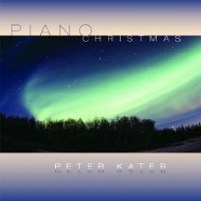
Piano Christmas by Peter Kater
|
Piano Christmas is an
exciting new solo piano Christmas album from Peter Kater. The recording
is made up of twelve tracks that include traditional Christmas pieces,
a couple of newer popular Christmas songs, and some classics that
aren’t always associated with the holidays. Many so-called “new age”
holiday recordings are beautiful and restful, which is wonderful, but
some of Kater’s arrangements also convey the excitement and
anticipation of the holidays as well as thoughtful reflection. This is
a wonderful album to chill with, but it would also make a wonderful
backdrop for holiday get-togethers. Piano Christmas
begins with an energetic arrangement of “Coventry Carol,” a piece that
is often mournful and very dark. Kater respects the spirit of the song
yet gives it a new take that works well. “Walking In The Air” is a
newer (1982) song. Originally composed for the animated film The Snowman,
the haunting melody has become one of my favorites. Kater’s arrangement
is livelier than I’ve heard it before, but it’s gorgeous. I’ve never
thought of Erik Satie’s “Gymnopedie No. 1” as a Christmas piece, but it
fits in well. Kater’s arrangement is much fuller and more complex than
the original piece (another one of my favorites), bringing it into the
21st century. “Angels We Have Heard On High” is a carol that is often
successfully jazzed up, but Kater gives this one reverential treatment
- a beauty! “What Child Is This?” is also quiet and peaceful, and I
suspect that this is mostly a lovely improvisation. “Pavane Variations”
is based on the Faure’ classic, and Kater creates a magical spell with
it. “O Tannenbaum” is one of the simplest of the Christmas melodies,
but Kater’s variations on the melody are warm and heartfelt. His
arrangement of “Canon in D,” is fairly loosely based on the Pachelbel
classic - recognizable, but a welcome change from the norm. “Let There
Be Peace on Earth” is a prayerful and passionate plea for peace -
stunning! Kater’s “Oh Holy Night” is one of my favorite recorded
versions of this song. Often performed in a very dramatic fashion,
Kater slows the melody, keeping it simple and deeply emotional. The
closing track is “Prelude in G Minor Variations” by Albinoni, another
classical piece that is well-suited to a holiday album, even though it
is not usually associated with Christmas. Dark and intense yet achingly
beautiful, it’s a excellent choice as a closing piece. Peter Kater has been one of my favorite artists for many years and Piano Christmas lives up to all expectations. It will be a welcome addition to anyone’s holiday collection, and the not-so-Christmassy selections will make it easily playable all year. Highly recommended! It is available from www.peterkater.com, Amazon, CD Baby, and iTunes. Reviewed by Kathy Parson's Mainly Piano website reprinted with permission on Ambient Visions |