|
Reviews 02-18-2001 |
Music Reviews |

|
|
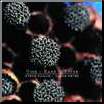
The inscription inside the CD label says, "The music is the medicine," and this sums up the thinking and intention behind this collaboration between Steve Roach and Mexican pre-Columbian percussionist Jorge Reyes. We have heard this collaboration before (along with guitarist Suso Saiz) on two powerful albums, Forgotten Gods (1993) and Earth Island(1994). All of these albums, and many others by Roach, either alone or with collaborators, form a more than decade-long musical exploration of shamanism and the shamanistic experience. Each album illuminates a different aspect of this primordial spiritual path - from the Dreamtime of the Australian aborigines, to the songs sung by shamans, to chanting and the didgeridoo, and especially the use of drums and other percussion to induce what anthropologist Michael Harner calls the "shamanic state of consciousness." In 2000, Roach and his collaborators brought us three major albums in this shamanic cycle. Vine, Bark, and Spore was the first, followed closely by Serpent's Lair and then Early Man. Serpent's Lair, the companion album to this one, was devoted to shamanic drumming, the "extroverted" noisy "technique of ecstasy." But Vine, Bark, and Spore, though it does have rhythm and chanting, moves into the more "introverted" aspects of shamanism, namely the voyage to the Innerworld which is often undertaken using what Roach and the shamans call "earth medicine," but what our own unspiritual world simply calls "hallucinogenic drugs." Thus the title, which comes from the natural forms from which these medicines are derived: ayahuasca vine bark, and psilocybin (mushroom) spores. Before readers get all nervous, let me stress that this is NOT "drug music." In fact, it is a way AWAY from drugs, providing a non-chemical way to experience the shamanic voyage. "The music is the medicine." Roach and Reyes create sonic environments which lead the imagination into the primal world beyond culture, the inner world of the earliest civilizations before the separation of "imaginary" and "real" became a standard part of our mentality. The soundworld on this album is exceedingly rich. (I recommend listening to it on headphones if you want to catch all the little details.) There is percussion and rhythm, most of it rather soft. The drumming is also slow; it mostly moves along in a contemplative and restful way, especially the booming, almost heartbeat-like rhythms in track #4, "Night Journey." The many rattles, sounding stones, and rainsticks which are Roach's signature sounds are still here, along with Reyes' Mexican percussion, including clay pot drums, and pre-Hispanic wind instruments such as pipes and ocarina. Reyes also brings in environmental recordings from Mexico, adding in the chirping of crickets and birds or the sprightly recitation of a Native storyteller speaking an Aztec/Spanish dialect. There is a didgeridoo in one track (again #4, "Night Journey") and some chanting vocalizations in others. Interestingly, there are none of the familiar "Roach floating chords" here, though there is much electronic manipulation, looping, echo, and that trademark vast reverb. The tonal, musical elements in Vine, Bark, and Spore are especially well-structured. Throughout the album, the percussion environments are tied together with a single, simple musical theme, that of a minor third, which appears at the very beginning and is developed throughout the album until the last track. This is carried by an artful blend of guitar and synthesizer, often so melded that you cannot tell where one ends and the other begins. Throughout his recent albums, Roach seems to be using more and more guitar and guitar-like sound to express his harmonic ideas. Here the guitar line is played by Reyes, with electronics by Roach. The musical continuity of the album is re-emphasized by a repeat of the beginning of the first piece at the beginning of track 6, "Healing Temple." In the last track, # 7, "Gone from Here," which is also the longest, the minor third motif we have been hearing flows out into a beautiful, languid, drifting meditation in which not only does the third switch to a comforting major interval, but is expanded (both major and minor thirds) into a tone-row just short of a melody. The guitar sound predominates here, though it is, as elsewhere, supported by synthesizer blending. Roach is accustomed to ending his albums on a peaceful, gentle note and this follows his pattern. It is an exceptional example of his ability to lead the listener out of the dark shamanic underworld, back into the light. |


|
|