Reviews 04-30-2004

Music Reviews 


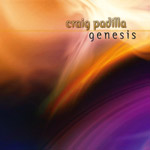
Genesis

by Craig Padilla

Visit Craig Padilla's website


"Genesis" is a new "Berlin School" release and one that fans of the genre should immediately seek out as it is a nice combo of old and new strengthened by the emotional expressiveness of the composer/performer. For inspiration, Padilla leans more toward the earlier works of Klaus Schulze than some of the other Berlin school innovators, but he adds so much to it with his sound design and expression that he is really his own man. Another exciting aspect of this release is that many of the synthesizers being used appear to be analog, which gives an overall warm character to the recording.  

 The record starts out with a piece that is chock full of short, bouncy, optimistic motives that overlap to create new patterns. The sequences serve to shape the other material and drive the piece. The piece is both driving and relaxing at the same time and the overall mood is one of energetic happiness. I had a slight niggle with the quantity of white noise effects that bring the piece to a close, but it was an excellent start to the recording; mellotronish pads, bubbly sequences and the like were presented effectively and in a charming fashion. "Moon Tides" is a slower piece, beginning in the tradition of Schulze's slower pieces with pretty ambient pads and plucked sounds gradually coming into focus. The guitar/sitar-sounding solo has a relaxed, improvisatory feel to it. A swirling sequence, evoking the spirit of Schulze's  "Mirage" gives way to gentle patter of activity that sounds like the listener is walking in the middle of a mist only this time the listener is hyper aware of everything around. It is a very nice sound picture and a nice way to gradually close the piece. "Ascension" begins with a slow, evocative soundscape that gradually transforms itself into a remarkable piece. Here I feel that an entire expressive world of sound was created and the primary impressions I received while listening were those of wonder and ecstasy. The piece is not particularly fast, the sound design is first rate and allows Padilla to emote very effectively. Really, this piece is worth the price of  admission and represents the best of this genre.

The final track, "Message from Within" starts nicely, with all the effects tools for a Schulzian journey into minor-key ambience; mellotron choir sounds, lush string pad sand a nice morphing filter applied to the works. Padilla is particularly effective in sustaining musical interest with the synth effects such as chirping filter overdriving and other such stock of theBerlin school musician.  The piece continues in the above vein quite nicely until some light percussion is introduced. This is tasteful and unobtrusive, but I felt that the piece began to lose a little steam here. It ends with a nicely executed melodic excursion, with the lead melody generated by a harpsichord sound. This was nicely done, but not up to the level of the rest of the recording.

Don't let the minor quibbles put you off from what is otherwise a very enjoyable listening experience. I do recommend this recording highly.

Reviewed by Mark Morton for Ambient Visions


The Sacred Ordinary

by Paul Ellis


Visit Paul Ellis' website


When The Sacred Ordinary arrived in 2004, electronic music was already looking in several directions at once. The classic Berlin School pioneers had long since established the sequencer-driven vocabulary of the genre, while ambient music was becoming increasingly atmospheric and minimalist. Many artists chose one path or the other. Paul Ellis found a way to inhabit both. On The Sacred Ordinary, he blends the movement and momentum of traditional Berlin School electronics with the reflective depth of ambient music, creating what remains one of the strongest releases of his career and one of the more enduring electronic music albums of its era.

What immediately distinguishes the album is its sense of patience. Ellis never rushes a musical idea. Themes emerge gradually, unfold naturally, and are given room to breathe. The opening track, “Icon,” serves as a perfect introduction to the album's aesthetic. Built upon gently evolving sequencer patterns and expansive synthesizer textures, the composition develops with remarkable grace over its nine-minute duration. Rather than overwhelming the listener with complexity, Ellis allows layers to accumulate organically, creating a sense of discovery with each passing minute. Contemporary reviewers singled out the track as one of the finest pieces Ellis had recorded up to that point, and more than two decades later it remains a compelling showcase of his compositional strengths.

Although Berlin School influences are evident throughout the album, The Sacred Ordinary never feels like an exercise in nostalgia. Ellis clearly understands the traditions established by artists such as Tangerine Dream and Klaus Schulze, yet his music carries a melodic sensibility and emotional accessibility that keeps it from becoming merely retro. The sequencing is precise and energetic, but it exists in service of atmosphere and mood rather than technical display. There is movement here, certainly, but there is also contemplation.

The title track demonstrates this balance beautifully. Floating pads, shimmering tones, and carefully sculpted ambient textures create an almost meditative environment. The piece unfolds more as a tone poem than a traditional electronic composition, emphasizing emotional resonance over dramatic progression. Ellis has always possessed a gift for creating evocative sonic spaces, and on this album that ability is fully mature. Every sound appears carefully chosen and thoughtfully positioned within the mix, contributing to a sense of depth that rewards repeated listening.

Another notable aspect of the album is its collaborative spirit. New Zealand ambient artist Rudy Adrian contributes keyboards and overtone chanting on several tracks, adding subtle textural dimensions to Ellis's compositions. These contributions never distract from the album's identity but instead enrich its sonic palette. Likewise, post-production work from Steve Roach helps give the recording an expansive and immersive quality. Rather than feeling like a collection of guest appearances, the collaborations function as carefully integrated elements within Ellis's larger artistic vision.

Several tracks highlight different facets of Ellis's musical personality. “The Still Center of a Turning World” radiates optimism through its melodic architecture and celebratory textures, while “Presence” embraces a more energetic sequencer-driven approach rooted firmly in classic electronic music traditions. “Cascade” combines rhythmic motion with atmospheric elements, creating one of the album's more adventurous sonic landscapes. Yet even as the album explores varied moods and tempos, it maintains remarkable cohesion. There is never a sense that Ellis is simply moving from one idea to another. Instead, each piece feels like a chapter within a larger narrative.

The production deserves particular praise. Created primarily with digital instruments while achieving the warmth and richness often associated with vintage analog synthesizers, the album demonstrates Ellis's skill not only as a composer but also as a sound designer and engineer. The timbres possess clarity without sterility, warmth without muddiness. Individual elements remain distinct while contributing to an enveloping whole. This attention to sonic detail allows the album to reveal new subtleties over time, whether heard through headphones or a dedicated listening system.

Perhaps the album's greatest achievement is its emotional sincerity. Much electronic music impresses intellectually through technical complexity or sound design innovation. The Sacred Ordinary certainly possesses those qualities, but its lasting appeal comes from its humanity. There is a quiet sense of wonder woven throughout these compositions—a recognition of beauty in everyday moments that mirrors the album's title. Ellis invites listeners to slow down, to pay attention, and to find meaning in subtle transformations rather than dramatic gestures.

More than twenty years after its release, The Sacred Ordinary remains an exemplary fusion of ambient music and Berlin School electronics. It honors the traditions that inspired it while maintaining a distinctive voice of its own. Richly melodic, emotionally engaging, and expertly crafted, the album stands not only as one of Paul Ellis's finest achievements but also as a reminder of how expressive electronic music can be when technical mastery is matched by artistic sensitivity. For longtime fans of the genre and newcomers alike, The Sacred Ordinary remains well worth discovering.

Reviewed by Ambient Visions


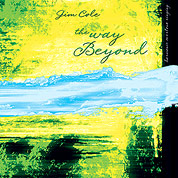
The Way Beyond

by Jim Cole

In 2002, I wrote about harmonic overtone singer Jim Cole's previous solo work Godspace stating that it was ". . . some of the most superlative ambient music I've ever heard. Surely it will rate in my top three best of the year. It is a work of staggering beauty and nuance, at once improvisational and composed.  This disc has such an emotional and spiritual resonance for me; it is as if Cole had tapped into my biorhythms for 74 minutes, occupying my thoughts, and impregnating all activity around me with meaning where before there seemed to be none.  This is timeless, important music, and I give it my highest recommendation."  It did make it on to my top three list of that year, and I do give it my highest recommendation as one of the finest examples of modern ambient done simply and beautifully, without pretense. 

Now I have the opportunity to describe Cole's newest release, The Way Beyond, and I find myself scrabbling at the same phrases I'd written two years ago.  I want to warn the reader in advance that I am going to get a little "out there" in this review, but it's the only thing keeping me from gushing uncontrollably about the music.  Firstly, this is a vaster work than Cole's previous solo CD--it's comprised of twelve tracks, but each track melds into its successor seamlessly, creating a wavering tapestry of sonic perfumes and impressions.  While each cut on the disc has a separate mood or tone, The Way Beyond must be considered as a massive, undulating, living, breathing ambient zone of stillness and, unusually, simultaneous constant change and transition.  While the basis of this recording is layered drones comprised solely from Cole's harmonic singing, these layers are overlapped with constantly changing sonic waves and patterns which create the feeling of watching a rushing brook; all motion and churning fluid on top, but a deep, peaceful stillness beneath. 

It would be pointless to describe this work on a track by track basis as I do on many reviews.  I'm more comfortable attempting to communicate impressions I have while listening; by reading this review, you may in some way have an idea of the places music of this nature can take the willing listener.  At around track nine, for example, the deep tones of Cole's voice expand and contract in an almost psychedelic flux, as if one is buffeted upon solar winds.  Sometimes while writing reviews of music of this nature, I feel as if I'm the narrator in an Edgar Allan Poe story--swept away describing the effects of his own madness, and leaving no lasting impression on the reader about what he is trying to communicate.  This is the difficulty in reviewing The Way Beyond--it calls to mind so many powerful and inexplicably spiritual thoughts, impressions, feelings, that to attempt to put it down on paper is to cheat it of its power in the first place.  I'm reminded of the Zen koan (which I will paraphrase poorly) where the student comments to the Zen master: "Master, look at the trees, listen to the birds, watch the sunset dipping below the horizon!  It's all so beautiful!"  To which the master replies wryly: "Yes, but it's such a shame for you to say so."  By the end of track nine, I've thought of this koan and much, much more--a continuous daisy-chain of relationships and correlations within my own conscious (and unconscious) mind.  This is inner space music in the highest sense of the term.  Cole's seemingly plaintive cries strike as melancholy in track ten, but they are at the same time hopeful.  A living embodiment of the pains and pleasures of existence?  See?  I can't help but get introspective--it's in the very core of this music, which brings one within his or her self to a point of absolute attention to minute thoughts, however ephemeral they may be. 

And this is the crux of the matter--at the very core of things, Jim Cole, armed with only looped drones created from his own voice, has somehow unlocked a secret place within just by creating music.  Here, as if conjuring a primordial state from the trappings of modernity, we have the ultimate power of ambient music, perhaps (in my opinion) above many, if not most, other types of music.  This wordless music, without connotation, has the power to unearth nameless spiritual delight within.  There is no question--The Way Beyond is holy music, no matter what your persuasion-- it is ageless, and always a valid and enriching experience.  As with Godspace (and I believe that The Way Beyond surpasses its predecessor in terms of breadth and sonic diversity from the same essential sound sources), I find the music herein to be unquestionably one of the finest ambient/atmospheric releases of 2003.  This is the kind of music that reminds of why one became an appreciator of the genre in the first place--it makes you feel good, larger than yourself, and, most of all, connected to the artist and music in some way that is difficult to describe with words that always seem clumsy by comparison.  This disc goes “way beyond” Godspace, and that's really saying something.  The Way Beyond gets my highest recommendation:  it's paradigm shattering work by one of the brightest lights in today's ambient scene.   

Reviewed by Brian Bieniowski reprinted here on Ambient Visions.


PiNG AMBiENCE 2

by Various Artists
 

VisitAmbient Ping's website


Toronto's AMBiENT PiNG releases the second in it's ongoing series of PiNG AMBiENCE discs, spotlighting artists from around the Toronto electronic community as well as like-minded PiNG friends from farther afield.  This time compiled by Eric Hopper of  Sylken, PiNG AMBiENCE 2 explores the space-ier side of the genre, sonic excursions to the  planets that orbit the PiNG.

The disc opens with "Phases of the Moon" by dreamSTATE and Susanna Hood, a  flowing piece of spectral elegance highlighting Susanna's wonderful vocal stylings.  A fantastic track that typifies the collaborative spirit of the PiNG.

Alpha Wave Movement offers the track "Sunset on Timeless Landscapes", a  beautiful lament to the mysteries of the stars.  Synthlines ebb and flow, minimal percussion  passes by, the occasional snatch of sound sweetening the mix just so.  Beautiful.

PiNG favorites Sylken supply a brilliant new song entitled "The Light Unseen".  Travelling the same spaceways that have made them so beloved in the Toronto scene (and beyond), "The Light Unseen" captures the sense of movement through the stars, graceful pads and percolating synths providing the landmarks (or spacemarks if you will) along your journey.

Guitarist Paul Royes treats us to a lovely work of layered and processed  guitar that delights and inspires.  His track "Dolphin Sky" is one of my favorites on the disc with it's beauty and virtuosity.  Brilliant.

Terry O'Brien aka Anomolous Disturbances provides "The Invisible Landscape" another guitar based piece.  More drone driven in tone "The Invisible Landscape" offers our first glimpse at the darker side of the PiNG, a study in quietly building dark ambient.  Very nice work.

earotica is a collaboration between Scott M2 of dreamSTATE and myself, so out of fairness I'll decline to comment on it other than to say it's the first release by  our mutual side project and that alone should be reason enough for it to be interesting to you...  =-)

Solipsystem chime in with another one of my favorites on the disc, "Verdant", a brilliant marriage of arpeggios and minimal synth melodies.  Absolutely beautiful work that resonates deep within me every time I hear it.

Steven Sauve in his guise as Karmafarm offers "of all the things we said",  an exploration in organic synth systems and oblique motion that slowly gives way to a groovey synth line.I love the use of the soundfield in this one, it has such a rich, full sound.  Lovely.

"Turn Twist Twirl" represents the work of Aidan Baker, an artist who is  comfortable in a variety of styles and forms.  In this track he creates a spontaneous improv piece in keeping with the space-y styles of the disc.  I often compare Aidan's work to the magical and this track is very much in keeping with that idea.  A stunning  performance by one of Toronto's brightest stars.

Performing as Styrohead, Joe G, another Sylken alumni, contributes the track "Portal". Deep drones lay a bed of sound over which a variety of tones pass subtely  and effortlessly. Wonderful work.

Jamie Todd represents URM with the track "consume", a dark droning motion based piece.With a few simple elements Jamie takes us on a trip into the deepest depths of space, where stars are consumed by living dark matter and the laws of physics that we understand hold no meaning.  Another fabulous piece from one of my personal favorites.

Sara Ayers supplies the piece "I Sewed The Feathers To My Arms", a stunning vocal based piece accompanied by minimal instrumentation.  I've said this before on countless occasions, but I think it bears saying again that Sara Ayers is a treasure.  Her work is always of the highest quality, brilliant, sparkling, wonderful.  This track is a prime representation of what she does, and of course what she does is amazing.  Simply Amazing.

"Broken" by James Johnson closes out the disc with a beautiful organic piece where keys play delicate melodies and found sounds play underneath creating a rich dense soundscape that lives and breathes within it's own environment.  Wonderful work by one of the masters of the genre.

Needless to say, PiNG AMBiENCE 2 is an excellent collection proving that there are an incredible number of artists creating beautiful music worth discovering for yourself.  A wonderful introduction to a variety of talents and a testimony to the community that has developed around the AMBiENT PiNG.

Reviewed by Rik Maclean of Ping Things reprinted here on Ambient Visions.
Visit Rik's Ping Things website by
clicking here.


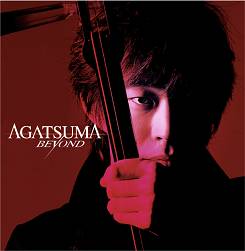
Beyond

by Agatsuma

Visit Domo Record's website

When Beyond was released, it arrived at a time when audiences outside Japan were becoming increasingly receptive to global musical influences. Yet few recordings managed to balance tradition and innovation as successfully as this remarkable debut from shamisen virtuoso Hiromitsu Agatsuma. Rather than presenting the shamisen as a historical curiosity or an exotic novelty, Agatsuma places the centuries-old instrument firmly in a contemporary setting, demonstrating both its versatility and its enduring emotional power.

For listeners unfamiliar with the instrument, the shamisen is a three-stringed, fretless lute whose distinctive tone has been an essential part of Japanese music for generations. Agatsuma, a child prodigy who achieved national recognition at an early age through Japan's prestigious Tsugaru shamisen competitions, possesses a mastery that allows him to move effortlessly between traditional technique and modern expression. On Beyond, that technical brilliance is never displayed merely for its own sake. Every note serves the music, and every composition feels carefully designed to reveal another facet of the instrument's personality.

What makes Beyond particularly compelling is the breadth of its musical vision. Throughout the album, Agatsuma explores the intersection of Japanese tradition and contemporary global styles without ever sacrificing authenticity. Jazz, funk, pop, folk, and even Latin influences appear throughout the recording, but these elements are woven naturally into the compositions rather than added as stylistic decoration. The result is music that feels both adventurous and deeply rooted.

Several tracks highlight the album's remarkable diversity. "An End of Sorrow" pairs the shamisen with accordion, creating an unexpected blend of sounds that evokes both European and Japanese musical traditions. The performance is graceful and reflective, allowing the unique character of each instrument to complement the other. In contrast, "Dawnlight" introduces a jazz-inflected atmosphere that demonstrates how comfortably the shamisen can function within contemporary arrangements. Agatsuma's phrasing remains unmistakably Japanese, yet the surrounding musical framework gives the piece a cosmopolitan character.

The infectious "Shami's Groove" may be one of the album's most successful experiments. Driven by funk-inspired rhythms and energetic interplay between the musicians, the track reveals the shamisen's surprisingly percussive qualities. Rather than sounding out of place among modern instrumentation, the instrument becomes the driving force behind the composition. Its sharp attack and expressive bends give the performance a vitality that few traditional instruments could achieve in such a setting.

Not every piece relies on fusion to make its impact. "Heartbeat" offers a more traditional perspective, showcasing the rhythmic precision and emotional nuance that define the Tsugaru style. Here, listeners can appreciate the instrument in a form closer to its cultural roots while still benefiting from the album's pristine production and contemporary presentation. Likewise, "Tears" reveals a softer, more lyrical side of Agatsuma's artistry. The composition unfolds with remarkable restraint, allowing the shamisen's voice to convey tenderness and introspection without resorting to sentimentality.

By comparison, "Panther" demonstrates the instrument's power and intensity. Agatsuma attacks the strings with confidence and authority, producing a performance that feels almost rock-like in its energy. It is easy to understand why he was frequently described as bringing a "rock star" presence to traditional Japanese music. The track captures both his technical command and his ability to make an ancient instrument feel entirely contemporary.

The album's production deserves considerable credit as well. The arrangements provide ample support without overwhelming the shamisen, ensuring that the instrument remains the focal point throughout. Every accompaniment—whether jazz ensemble, rhythm section, accordion, or atmospheric textures—exists to enhance the music rather than distract from it. This careful balance allows Agatsuma's artistry to shine while creating an accessible listening experience for audiences unfamiliar with traditional Japanese music.

Beyond remains an impressive example of successful musical cross-pollination. It neither abandons tradition in pursuit of modernity nor clings rigidly to the past. Instead, Agatsuma demonstrates that innovation often grows from a profound understanding of one's roots. The result is an album that serves equally well as an introduction to the shamisen, a showcase for a remarkable performer, and an engaging collection of contemporary instrumental music.

Beyond succeeds because it lives up to its title. It moves beyond genre boundaries, beyond cultural expectations, and beyond conventional notions of what a traditional instrument can accomplish. In doing so, it remains as fresh and engaging today as it was upon its original release.

Reviewed by Margaret Foster for Ambient Visions


Kataribe

by Missa Johnouchi  

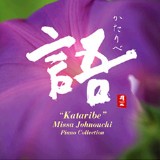
“Kataribe (Storyteller)” is Missa Johnouchi’s first solo piano album, and is made up mostly of original works collected from previous albums and converted into lovely, flowing piano pieces. Johnouchi successfully blends Asian musical forms with western contemporary and classical styles, creating a pastiche that is both beautiful and relaxing for those who want easy musical accessibility, and complex enough for the active listener who delights in the discovery of new facets with each listen. Johnouchi has a history of composing for Japanese television and film, and her music is visual and vivid. Referring to Chopin’s title of “The Poet of the Piano,” Johnouchi calls herself “The Storyteller of the Piano,” hence the title of the album. Her inspiration comes from an awe of nature and the seasons, and the changes they bring. Most of the pieces have a somewhat melancholy feeling, but all contain a sense of hope and optimism as well as grace.

“Asian Wind” is the piece Johnouchi usually opens with in concert. It portrays a very gentle wind - perhaps more of a breeze that gracefully bends the delicate trees and flowers. Johnouchi has included two compositions by Kazumasa Yoshioka, the producer of Pacific Moon, her label. “Shuufu (Autumn Breeze)” is especially elegant. The warm flow of the piece soothes and uplifts. “Snow Forest” is full of open spaces, describing the gentle stillness and beauty of snow-covered scenes. Again, the grace and elegance of Johnouchi’s composing and playing is amazing as well as deeply evocative. “Deja Vu” is my favorite track. Johnouchi writes in the liner notes that she thinks people live searching for light because it’s the first thing we see the moment we are born and we remember forever what that moment felt like. That sense of searching and longing comes through clearly and emotionally. Here and there are some surprising chord changes that remind me of Satie - an intriguing and inspiring piece. I also really like “Horizon,” a very sad piece that was composed while visualizing a sunset at the horizon line. Slow and uncluttered but deeply emotional, it is gorgeous!

There isn’t a weak track on “Kataribe.” If you like elegant, deeply felt solo piano you’ll love this album. I do! It is available at most of the online music retailers as well as from www.pacificmoon.com. Very highly recommended.

This Kathy Parsons review originally reviewed for  Mainly Piano website. It is reprinted here on Ambient Visions with permission.


Alternate Realities

by Richard Bone

Visit a Richard Bone website

Several years ago I saw numerous message threads on one of the USEnet news groups about a promising new talent named Richard Bone. Chief among the threads was the almost alarming rate at which this person was releasing new albums. Convinced this was either a hoax, or some paid-for hyperbole, I paid little attention to all the talk.

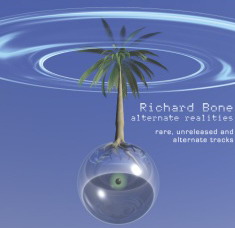
Not until I saw Ether Dome did I bother to take notice. However, I was impressed enough that when Alternate Realities showed up unexpectedly, I was eager to learn more. Slipping the CD into my player, I found myself enthralled. This is a hit!  A recent measure I use to gauge the success of an album is whether or not I want to copy the tunes to my iPod, where I will have access to the music when I drive, while I'm running, or simply when I'm at my computer.  I wanted this album on my iPod before the end of Elutherium, the opening track.  By the time "The House That Cugat Built" had finished playing, the iPod was connected and ready to receive.

Bone has the ability to move between musical stylings with seeming effortless ability. Ether Dome was an album of ambient excellence, Alternate Realities is bouncier, jazzier, more playful. An album of previously unreleased or alternate tracks (hence the title), this release does not bear any semblance to a throw-away work, or a release done just to fulfill some contractual obligation. This CD can justifiably fit into the tuneshelf of any serious ambient/electronic/alternative music fan.

"One for the Grooveyard," the third track on the CD, is a foot-tapping ditty that combines sparse piano lines, the muted sound of brushed high- hat cymbals, synthesized saxophone, and washes of pseudo-industrial sound that swirl and merge into a twenty-first century paeon to swing.

For a long time I did not count myself among the ever-growing legion of fans of Richard Bone.  Alternate Realities corrects that oversight. Highly recommended.

Reviewed by Fred Puhan for Ambient Visions.


Samurai Collection

by Various Artists

Compilation albums often serve one of two purposes. Some function as little more than marketing samplers, offering brief introductions intended to encourage listeners to seek out full-length releases. Others are assembled with greater care, creating a listening experience that stands on its own while showcasing the strengths of the artists involved. Samurai Collection, released by the renowned Japanese world music label Pacific Moon, comfortably falls into the latter category. Drawing selections from albums by Uttara-Kuru, Kiyoshi Yoshida, and Eri Sugai, the collection succeeds not merely as an introduction to Pacific Moon's catalog, but as a thoughtfully sequenced journey through several facets of contemporary Japanese instrumental and vocal music.

Pacific Moon built its reputation on presenting traditional Japanese musical elements through modern recording techniques and contemporary arrangements. Rather than preserving these sounds as museum pieces, the label consistently sought to demonstrate how ancient instruments and cultural traditions could remain vibrant and relevant in modern contexts. Samurai Collection embodies that philosophy beautifully. Across its running time, listeners encounter bamboo flute melodies, powerful taiko drumming, ethereal vocals, koto performances, and atmospheric textures that blend traditional and modern influences into a cohesive whole.

The album draws heavily from material originally featured on Uttara-Kuru's East Wind, Kiyoshi Yoshida's Asian Drum, and Eri Sugai's Mai. While these recordings originate from separate projects, they complement one another remarkably well. The sequencing creates a natural ebb and flow between moments of explosive energy and passages of introspective calm, allowing each artist's strengths to emerge without disrupting the overall listening experience.

Much of the album's emotional impact comes from this contrast. The percussion-driven pieces featuring Kiyoshi Yoshida provide some of the collection's most immediately engaging moments. His taiko performances are dynamic, forceful, and rhythmically compelling, demonstrating why Japanese drumming has captivated audiences around the world. Yet these tracks never descend into mere displays of power. Beneath the thunderous percussion lies careful attention to melody, arrangement, and atmosphere. The drums communicate not only strength but also discipline, ceremony, and cultural memory.

Counterbalancing these powerful performances are the contributions from Uttara-Kuru. Their flute-centered compositions possess a quieter elegance, emphasizing melody, texture, and emotional subtlety. The bamboo flute often carries a deeply evocative quality, capable of suggesting vast landscapes, changing seasons, and moments of contemplation with only a handful of notes. These pieces provide breathing room within the collection, inviting listeners to absorb the emotional resonance created by the more energetic tracks. Rather than competing with the percussion pieces, they complete the musical picture, illustrating another side of Japanese musical expression.

Eri Sugai's contributions add yet another dimension. Her voice frequently functions as an instrument unto itself, floating above the arrangements with an almost spiritual quality. Tracks such as "Konjaku Monogatari" demonstrate how effectively Pacific Moon blended traditional influences with contemporary production. Sugai's vocal approach transcends language barriers, communicating mood and atmosphere even for listeners unfamiliar with Japanese culture or lyrical content. The result is music that feels simultaneously intimate and universal.

The thematic character of the collection further strengthens its appeal. Many of the compositions draw inspiration from nature, mythology, spirituality, and everyday life. Titles such as "Wings of the Eagle," "Winter Dance," "The Lucky Spirit," and "Wooden Ship" suggest vivid imagery before a single note is heard. More importantly, the music fulfills those expectations. Whether portraying natural beauty, ancient traditions, or personal reflection, the artists consistently create soundscapes rich with visual and emotional associations.

One of the album's most memorable moments arrives with "First Image," a traditional solo koto performance. Stripped of many of the contemporary production elements found elsewhere on the compilation, the piece serves as a reminder of the enduring beauty of Japanese classical music. The delicate plucked strings create a sense of intimacy and refinement, offering a direct connection to centuries of musical tradition. Its placement within the compilation highlights Pacific Moon's ability to balance authenticity with innovation.

Production quality throughout is exceptional. Pacific Moon recordings have long been known for their pristine sound, and Samurai Collection is no exception. Every instrument is presented with remarkable clarity, allowing listeners to appreciate the tonal richness of the flute, the resonance of the drums, the subtle textures of the koto, and the expressive nuances of the human voice. The arrangements are spacious without feeling sparse, creating an immersive listening experience that rewards focused attention.

The presentation itself also reflects Pacific Moon's dedication to atmosphere and detail. The label became famous for treating its releases as complete sensory experiences, often including informative bilingual booklets and other thoughtful touches designed to deepen the listener's connection to the music and culture being explored. That philosophy is evident throughout Samurai Collection, which feels carefully curated from beginning to end.

Ultimately, Samurai Collection succeeds because it functions on multiple levels. It serves as an accessible introduction to several of Pacific Moon's most accomplished artists while also standing as a satisfying listening experience in its own right. Rich in atmosphere, beautifully produced, and emotionally engaging throughout, the album offers a compelling gateway into contemporary Japanese world music and remains one of the label's most effective showcase releases.

Reviewed by Margaret Foster for Ambient Visions


Out of the System

by Karmafarm

Fans of the Toronto ambient scene will no doubt be familiar with the name of Steven Sauve, one of Eric Hopper's frequent collaborators in the Sylken project and a member of quasiMODAL.  One may not however be as familiar with his solo work as Karmafarm, a systems based ambient project Steven has performed under for a number of years.  "Out of the System" is the first CD release by Karmafarm and it fully captures the charm and dark wonder of Steven's work.

"Roads into Ruins" is a rather ominous opening track, a lonely trip into the heart of darkness.  Deep drones play against the noises of industry, the sounds of ancient machinery revived from dormancy to transport us to another place.  A marvelous piece to introduce thedisc, simply stunning.

"Opulent Revision" treads a similar dark path, tones rising and falling  against a constantly shifting backdrop of sounds.

"Land of Sleep" plays with the soundfield, alien whirring and buzzing sounds flying around the listener, an almost insectile grace about them.  Quite beguiling this one.

"Leipzig Unseen" presents an arctic wind blowing through the frozen Tundra.  Pads sweep throughout the track alternately growing and shrinking in volume, the progress of movement measured in slowly oscilating tones.  Brilliant.

"Bamboo Shift" takes a complete one eighty and brings us out of the darkness for a few moments with some lovely echoing keyboard work over a number of rather exotic percussive tones.  Charming.

"Procession" returns to the darker tones of the earlier tracks, creating a sense of majesty and ritual with pulsing tones keeping time with a series of ascending melodies.  Very theatrical this one, something very regal about it.

"Psyko:logik" continues the journey through the dark with the sound of the abyss portrayed by the slow pulse of processed sound.  Chilling and enigmatic tones pass throughout adding to the atmosphere.  Truly inspired dark ambience.

"Out of the Blue" closes the disc with an oscilating drone blended with found melodies and distorted sounds.  A sense of departure is apparent in this work, a feeling of night's gradual ebb and the dawning of a new day.

I'm most impressed with "Out of the System", the sense of movement and atmosphere captured herein stand with some of my favorite pieces in the genre.  I wholeheartedly recommend this release and eagerly look forward to future work from Karmafarm.

Reviewed by Rik Maclean of Ping Things reprinted here on Ambient Visions.
Visit Rik's Ping Things website by
clicking here.