|
Q & A Index Page |
|
Harry Towell |
Ambient Vision's Q & A With
HT: I’d run a couple of labels before Whitelabrecs, including my old netlabel Audio Gourmet and then a short-lived attempt at a CD label, called Tessellate. In the latter, the design features and packaging format was really inconsistent and it sort of spluttered along. Then my wife and I moved into a new house and it had this small spare room where I set up my decks and vinyl collection. I looked through my records and saw
a lot of white label editions, in their scruffy paper sleeves and white circular inner labels containing very little information.
|
|
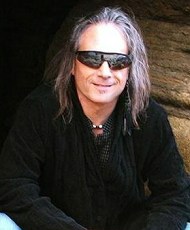
David Luxton |
Ambient Vision's Q & A With
DL: I founded Wayfarer Records in 2007 during my final year of
graduate studies (I’m also a professor and psychologist). Years prior, I played
in bands and composed instrumental music for film and television, but I wanted
to take the music further. My vision was to establish a small indie label
specializing in ambient instrumental music, which I have always enjoyed. I
planned to keep the label small and artist-focused, and I envisioned a “community”
approach in which the artists formed a collaborative network. Wayfarer Records marked its 15th anniversary in 2022. The
following year, I appointed a board of directors: Sean O’Bryan Smith, Dieter
Spears, and Jason Blake, who are friends and fellow artists. They have been
bringing things to an entirely new level. Further expansion is planned for the
coming year. DL: We have been focused on getting our artists out there
through promotion. We are constantly getting reviews and charting. While I kept
the label very small until recently, our shared vision for the label has
remained unwavering. We are flexible and adaptive. As an independent label, I
suppose you could say that we are “a small operation, we don’t fall into the
jurisdiction of the Empire.”
|
|
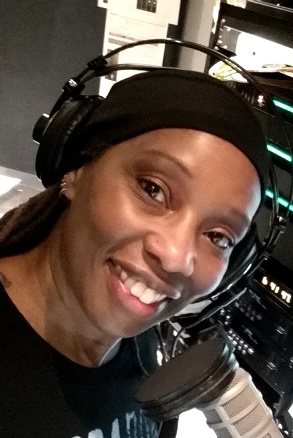
Renée Blanche
|
Ambient Vision's Q & A With
RB: Ambient/new age music entered my life when I decided I wanted to give radio announcing a shot. It was a community radio station in El Paso and the format was Jazz Pop with some new age music mixed in. David Arkenstone and Yanni are my first loves in the genre. Hearts of Space was part of the programming but I’d never really listened to it until I heard it while jogging which was never really my thing, but listening to HOS helped me feel calm and pace my breathing. I was intrigued. And so began my unexpected love affair with the genre. I’ve said many times over the years that had someone in my youth told me radio was in my future, I would have rolled my eyes at them in total disbelief. Had I been told it would be ambient/new age music, I would have doubled over in hysterical laughter. AV: Were you looking for something new or a new genre to listen to at the time that you discovered ambient? RB: I wasn’t looking for new music to listen to but I wasn’t opposed to new musical offerings. There’s music I’m not particularly fond of, but it’s been a part of my life for as long as I can remember because of my love of the dance. Click here for the rest of our Q & A with Renée Blanche about Night Tides |
|
Bill Fox
|
Ambient Vision's Q & A With
BF: While I always had something musical happening,
everything was of a limited scope when I lived in Ohio. Yet, all of those experiences prepared me for
what was to come so I suppose the "high points" were high from my
vantage point. They just weren't high in
terms of public profile. I formed my first band in elementary school and sang in
choirs at school and temple. The summer
after the seventh grade, I was asked to join a band at Music Arts, and Crafts
camp where I met my lifelong best friend.
We played two songs at the end-of-the-summer concert. Not a real big thing, relatively speaking,
but it was a high point for me. From high school
through my adult years, I played saxophone in concert bands, played in duos,
filled in last minute for bands, played in pit orchestras for musicals, and was
exposed to radio broadcasting. I played
at a folk festival in a university's large auditorium while I was in high
school. My first musical in 1986 was "Jesus
Christ Superstar" It was prerecorded but I insisted on spinning the disks
(vinyl, in those Click here for the rest of our Q & A with Bill Fox about Galactic Travels |

|
John Koch-Northrup |
Ambient Vision's Q & A With AV: You've had quite a long history with music going all the way back to the age of 5. Tell me about your discovery of synths and electronics in relationship to your music and how you began to explore it. JKN: My grandma started teaching me piano when I was five. Although I don't really remember that far back really well, I'm assuming it was seeing her play the organ at their house that got me interested, and probably music just being "in me". She played organ for 65 years at the same church in the small town I grew up in. What an amazing thing. I have many great memories of her playing. Once she felt she'd taught me as much as she could she pushed me to another teacher - and it kind of went on like that over the years until I completely stopped taking piano lessons when I was 19. I think I was 13 or 14 when I really got fired up about synths and electronics. The music on the radio catching my ear was coming from Howard Jones "Human's Lib" and then Depeche Mode when "Some Great Reward" came out. That's when I stopped borrowing my older sister's AC/DC and Ozzy cassettes and started buying a lot of records and cassettes ranging from synthpop to industrial
to jazz. Click here for the rest of our Q & A with John Koch-Northrup about Relaxed Machinery |
|
Chuck van Zyl
|
Ambient Vision's Q & A With STAR'S END is (with the exception of "Music from the
Hearts of Space") the longest running radio program of ambient music in
the world. Since 1976, STAR'S END has been providing the The music is presented in a non-stop drifting blend and
drawn from a diversity of genres including: electronic, ambient, spacemusic,
chillout, avant-garde, low-intensity noise, new age, international, spoken word
and classical. "STAR'S END is a unique listening experience, not just
an exchange of information like most radio shows", says van Zyl. "Due
to the unique presentation and the subtlety of the music, the program really
affects people, often in a profound way". Click here for the rest of our Q & A with Chuck van Zyl about Star's End |
|
George Cruickshank
|
Ambient Vision's Q & A With Ultima Thule was the
term used in ancient times to describe the regions comprising the far northern
extremities of Over seventeen years later Ultima Thule is the longest running programme of its type in Australia, and is firmly established as one of the country's foremost alternative music programmes, enthralling audiences with a unique, entrancing melange of ambient and atmospheric music from around the world and across the ages - all drawn from a private library comprising some 5000 recordings. Each broadcast of Ultima Thule is presented as a 90 minute
ambient soundscape narrative, with minimal announcer interruption. Click here for the rest of our Q & A with George Cruickshank about Ultima Thule |
|
Ben Fleury-Steiner
|
|
|
James Johnson
John Strate-Hootman aka Vir Unis |
Ambient Vision's Q & A With AV: The both of you are very well known in the ambient
community as JOHN : Both James and
I have a very focused interest in releasing music at our own pace and on our
own terms. It's an empowering motion as
an independent artist and one that actually enhances our creativity and
productivity. We determine the flow of
our music which is essential to honestly representing our life as artists. JAMES: From the very beginning of Atmoworks, both John &
myself we're aware of the limitations and frustrations associated with
releasing works through traditional labels and means and felt restricted by the
current paradigm of "the way things are done" in terms of marketing,
promotion and releasing of our works. We wanted a more fluid and direct outlet
for our creativity and saw that there was nothing available that met our
criteria. Click here for the rest of our Q & A with James Johnson and Vir Unis of Atmoworks Records |
|
Forest
|
Ambient Vision's Q & A With
Forest: Well the first program was broadcast back in Dec of 1981 and I still have the playlist from it and we have it posted on the Starstreams site. From then until the mid 90's it was more European electronic pioneers like Eno, Schulze, Jarre and Japan's Kitaro, along with the more new agey type titles from Windham Hill and people like Deuter with Celestial Harmonies. Later as things evolved Private Music came around with Patrick O'Hearn and others and then finally in the early 90's the program began to become primarily electronica artists from the UK and Europe like Banco de Gaia, the early laid back things from Moby from the USA and some of the UK's Beyond label artists. Ambient, spacemusic, dub, downtempo, trip hop, acid jazz...artists from all these categories. After taking a closer look at what we were playing then, the "exotic electronica" tag seemed to be pretty descriptive. And of course we were getting our Waveform label off the ground in late 93 as well. Click here for the rest of our Q & A with Forest of Waveform Records |
|
Mike Griffin |
Ambient Vision's Q A With AV: Tell me a little about yourself just prior to making the decision to form Hypnos Recordings. MG: I had been recording some very minimal ambient music of my own for a couple of years, and wanted to release my own CD, which became Sudden Dark. Before Hypnos even really got started, the concept expanded from a vehicle to release a CD or two of my own music, into something like what it is today. The decision to form Hypnos wasn't really a decision to form an aggressive, fast-growing, adventurous label. If I had known what it would become, I might have been afraid to take the first steps. AV: Was there something specific that really pushed you over the edge and gave you the impetus to form Hypnos?
MG:
In the beginning, the decision to start Hypnos seemed secondary and almost incidental to my desire to start releasing my own music. The big revelation for me was finding an artistic direction that I wanted to pursue through music or sound. So at first, the great majority of my energy and focus was on my own personal music, and a lesser focus was on the idea of this label. Gradually that ratio has become reversed! |
|
|