|
Not
Without Risk:
Ambient
Visions Talks with....Byron Metcalf
copyright 2001-2002
AmbientVisions
AV:
Tell me about the origins of drumming and percussion in your life?
BM: My father was a record
collector and he enjoyed virtually all types of music. However, his
favorite recordings were of the big band swing and jazz artists of
the 30s and 40s. So I grew up listening to a variety of musical
styles and was particularly influenced by the big bands that featured
their drummers. My favorites were the Benny Goodman orchestra
with Gene Krupa, the Tommy & Jimmy Dorsey bands,
first with Buddy Rich and later with Louie Bellson. Louis
Bellson was the first drummer to use double bass drums and this
just blew me away! I always loved the songs which included drum solos
and quite literally wore out these records!
When I was 15 years old I went to see the movie The
Gene Krupa Story starring Sal Mineo. I was mesmerized by
the drumming scenes and I watched the movie 2 times that day,
returning to see it a couple of more times during the following week
or so. Shortly afterwards I bought a pair of drum sticks and just
drove my parents crazy beating on everything around the house! I
really became possessed and driven by it and I just couldnšt
think of anything except drumming. My parents finally gave in and
bought me an old fairly beat up drum set and I played and practiced
every chance I got. Initially I played along with records and it
really didn't matter what style of music it was. Soon I found a
teacher and began doing some formal studying as well. Within 6 months
of getting the drum set, I started playing in bars and clubs in the
Phoenix area where I grew up. I had to catch a ride with someone to
these gigs because I didn't even have a drivers license yet! In those
days most of the music in the bars was country and western, but I
didn't care as long as I could play. So in retrospect, it certainly
seems like fate or destiny played a major part in this aspect of my life.
AV:
Was it apparent to you at that point in time the power that lay
within percussion/drumming beyond the ability to simply entertain?
BM: No, I don't think this
was ever something I was conscious of then. But looking back,
clearly, drumming had the power to completely "take me over"
and I really didn't care about much else for a long time. My grades
suffered and I pretty much abandoned other hobbies and interests,
like sports. My circle of friends even became smaller because I'd
rather be home practicing than doing anything else. The experience of
playing drums for me was the "highest of highs."
AV:
What were some of your entry points into the entertainment field
with your drumming/percussion skills?
BM: Well as I already
mentioned, very early on I began playing in bars and nightclubs and
quickly gained a good reputation in the Phoenix area. Within a couple
of years I was playing with some of the better bands in town and even
was called to do Waylon Jennings' first recording session in Phoenix.
Waylon had just signed with a new unknown label called A&M Records,
owned and operated by Herb Alpert and Jerry Moss. This
also forced me to join the musicians union at the age of 16! By the
time I graduated high school in 1963, I was mostly playing with
rock and R&B bands, and a few small jazz groups. My favorite
artists at the time were James Brown, BB King, The Beatles,
the Dave Brubeck Quartet, and Miles Davis. I also
liked a lot of the stuff that was starting to come out of LA like the Buffalo
Springfield, The Byrds, Mamas & Papas, etc. I
moved to LA about 6 months out of high school and joined a small
lounge/cover band headed by Kenny O'Dell who later wrote some award
winning songs including "Behind Closed Doors"
for Charlie Rich, and "Mama He's Crazy"
for The Judds. We toured the Nevada circuit, for 2-3 years
and had a couple of records that got some regional west coast
attention. I worked with some other bands and started getting into
some studio work in LA. Later, Kenny was instrumental in convincing
me to move to Nashville in the early 70s because the studio
scene there was starting to really open up. By then my musical tastes
and style had developed into an appreciation of everything from Jimi
Hendrix to Hank Williams, which really served me well in
the studio. A pivotal point in my career was playing on a few of the
tracks on Kenny Rogers' album "The Gambler."
For better or worse, early on I starting to treat
music as a "business" and directed my career towards
that which would provide the greatest opportunity for commercial
success. Of course often this meant that what I was doing was not
necessarily challenging from a musician's point of view. Although
this attitude was helpful in terms of financial success and security
as a working musician, it also contributed to boredom and burnout
later on.
|
AV:
You were also a record producer, what kinds of music have you had experience with as a producer and how has it helped to shape what was eventually to become your own "style" of music?
BM: Prior to the last 3 to 4 years, most of my production experience has been within the pop/rock and country fields. I also co-produced a soundtrack for an independent educational video and have produced some spoken word projects as well.
My production experience has really allowed me to become quite comfortable in the recording studio and I've learned a great deal about the technical aspects of recording. I've worked with some great engineers along the way which has been an extraordinary education. When I began experimenting with tribal, shamanic, world fusion, and ambient music, I already possessed competent technical skills in terms of both the percussion instruments and the recording gear, so I was able to focus
more on creating and performing than if I had not had this background.
|

|
Also, producing has helped me develop a keen sense of musical and sonic structure. However, with the music I'm creating now, more often than not, the typical structure of a song is abandoned to allow the process to flow more organically. I am also learning how to use the recording technology much as I would any other musical instrument. The studio and the technology has become much more of an integral part of the creative process. I have a private studio in my house, which gives me
the opportunity to experiment and create without any restrictions whatsoever.
AV:
I find it surprising that you also hold Doctorates and Masters
degrees in psychology as well as being a musician. Tell me about the
simultaneous growth along these two seemingly separate paths in your
life and how one has influenced the other?
BM: Well, these paths haven't
really been simultaneous until recently. In 1984 I finally became
completely burned out with the music business. I had accomplished
just about all of the goals I had set for myself. I performed at
virtually every venue I wanted to, including most of the major tv and
awards shows, had met most of my heros, had performed on gold and
platinum records, and had made a LOT of money. I was what I
called "soul bored." A few years prior to this I had
experienced some problems with substance abuse which I overcame, and
had started doing some volunteer work at rehab center in Nashville.
Apparently I had a natural ability for this and was offered a full
time job as a substance abuse counselor. I took the job (at about 10%
of the income I was currently making) and it just felt like it was
time to quit music and do something else; the proverbial search for "meaning
and purpose." I then began my formal education and gained a
great deal of experience and training in the counseling field with a
particular interest in addiction treatment and recovery and the role
of spirituality in general.
I soon became very interested in the healing
potential and therapeutic use of nonordinary (alternative) states of
consciousness. Early research in this area primarily involved LSD and
other psychedelics, which ironically, showed great promise for the
treatment of addictions. I began formal studies in this area
utilizing non-drug methods like breathwork, various forms of yoga and
meditation, trance dance, sweat lodge, vision quests, and of course,
shamanic journeying which utilizes a monotonous drum beat and
sometimes other percussion instruments to facilitate entering into an
altered state of consciousness and also to help "carry"
the journey along. I also studied and experimented with the use of
other kinds of music to change consciousness and facilitate healing.
Although I hadn't even picked up a drum stick for several years, it
occurred to me that with my drumming background, I might begin
experimenting with some of these ancient shamanic rhythms and
techniques, and that perhaps I could use these with some of my
counseling clients and/or in some of the workshops or seminars that I
was facilitating. At this point my music and psychology careers
started interfacing quite naturally.
During my doctoral research, I did a great deal
of field work with shamans and shamanic teachers from North and South
America. Most of my research focused on shamanic healing practices
that utilized nonordinary states, and in my role as "participant-observer"
I had many extraordinary experiences which offered me incredible
insights into infinite realms and levels of consciousness and
reality. These have had a dramatic effect on virtually every aspect
of my life, and certainly much of what I am now able to see and
experience as a result of continuing shamanic practice, informs and
influences my music at a fundamental level. This also has increased
my effectiveness in the way I work in my counseling practice.
Currently, other than obvious technical aspects, there is very little
difference in how I "hold the space" with a client
in a counseling session and how I enter into the recording studio
environment. Its very much a matter of intention and conscious
awareness of being fully present with everything that is happening.
AV:
What was your first solo project for CD that focused on
drums/percussion and what were some of the goals that you wished to
achieve with the release of this CD?
BM: My first solo project "Helpers,
Guides & Allies. . .Navigating the Shamanic Landscape" 1998
was the result of a long time goal to create a drumming
CD primarily for Holotropic Breathwork sessions. Holotropic
Breathwork was developed by Dr. Stan Grof who is considered
the world's greatest authority on the use of nonordinary states, and
who actually designed and supervised much of the early psychedelic
research. Holotropic Breathwork can be considered a non-drug
extension of the psychedelic model that Grof developed and utilized.
I trained with Dr. Grof and was certified to facilitate holotropic
breathwork in 1989. The holotropic method utilizes very powerful,
driving music as part of the process, and in workshops, the music is
ideally played on a large, high quality sound system. The music is
prerecorded and can include ceremonial and ritual music from
different cultures.
In the early stages of a session, much of the
music includes a lot of drumming and percussion to help one move into
a nonordinary state. Being a drummer, I've always had very specific
ideas about what an ideal drumming CD for holotropic breathwork might
sound like and since I couldn't find it, I thought I might try and
create it myself. Finally in 1997 I was able to get everything in
place and transformed our workshop space into a recording studio for
about 6 weeks while I recorded all the basic drum and percussion
tracks and overdubs of didgeridoo and synth. The final mixes were
done at a local studio that has a great engineer and excellent gear.
I didn't envision the CD to have such a fundamental shamanic theme,
but the project naturally evolved in that direction so I just flowed
with the process. The CD title emerged toward the end of the
sessions. It has been extremely well received in the holotropic,
shamanic, and therapeutic communities was rated #4 in Backroads
Music's "1998 Best of Year Selections" in the
World Music category, so overall I'm very pleased with the results.
AV:
How have you integrated or used music within your practice as a
transpersonal therapist/teacher? As a follow-up to that question I
would also like a brief definition as to what exactly transpersonal
psychology is?
BM: I often use prerecorded
music as part of imagery and other trance work with clients.
Depending on the application and intention of the session, the
musical style can include ambient, shamanic and sometimes classical,
and others of course. And, as I mentioned earlier, music is an
integral part of holotropic breathwork. I will also use live drumming
and other percussion instruments, primarily rattles and click sticks,
with clients for shamanic journeying and various other types of
shamanic healing methods, most of which focus on energy movement,
cleansing, clearing, extraction, etc.
Transpersonal psychology is simply a model of
psychology which includes and embraces experiences and concepts of
reality that go beyond the boundaries of the conventional Western
psychological model. Transpersonal experiences include mystical,
spiritual, archetypal, mythological, shamanic, and so on. In general,
transpersonal psychology resists many of the common labels and
diagnoses employed by Western psychology and tends to view human
psychological problems and challenges in a much more humane and
holistic manner. Experiences of alternative states of consciousness
are generally seen as possessing transformative potential as opposed
to viewing them as strictly a pathological condition that should be
medicated and controlled. A transpersonal psychotherapist believes
and trusts in the power and wisdom of each person's "inner healer."
Also, a transpersonal therapist would be much more inclined to
recommend yoga and meditation as a treatment strategy as opposed to
prozac or zanax.
AV:
What is it about drums and drumming that moves an individual's
consciousness to another state and how does this shift aid in healing
or understanding of ones inner self?
BM: Without getting too
technical here, several formal research studies have shown that
listening to a monotonous drum beat at approximately 220 beat per
minute, as with typical drumming for shamanic journeying, will begin
shifting the listener's consciousness into the theta levels at about
the 10-15 minute mark. This has been accurately measured with EEG.
The theta levels are those which have to do with trance, creativity,
and certain dream states. Other factors that are involved have to do
with the many overtones and frequencies that a typical drum produces
in this type of context. An interesting feature of this phenomenon is
that the theta level shift occurs even if the listener is resisting it!
What researchers are now discovering, and of
course what shamanic cultures have known for thousands of years, is
that when one enters into an alternative state of consciousness with
clear intention, in a ceremonial, ritual, or therapeutic context,
extremely powerful healing potentials are activated and mobilized
within the individual. This can produce positive benefits on all
levels: physical, psychological, mental, and spiritual. Stan Grof
has always argued that "core healing" can only occur
within a nonordinary state of consciousness. These healing potentials
are simply not available to us in our normal waking state. Drumming
and the use other percussion instruments were among the first methods
used to help produce these states. Drumming is so utterly primal and
basic in its nature that in some way, everyone can respond to it in a
way that is positive and, often quite transformative.
AV:
When you enter the studio to lay down tracks what state of mind are you in that allows your inner creativity to flow out and then into the recordings that you make?
BM: Well Ideally I like to be very much in touch with my inner world, and be in a positive psychic and emotional space. Typically I have one or more ideas really calling or sometimes screaming to get out. In my case this often will be a percussion rhythm or groove that I'm hearing in both my head and body. More often than not, I have a clear idea or feel for what I want it to sound like. I can be inspired by a wide variety of
common experiences like listening to other artists' music, watching a movie (I'm really a fan of film music), walking our dogs, and I sometimes get ideas from working with my clients or just talking with a friend. Many times creative inspiration comes in my dreams and from various types of inner work like shamanic journeying, meditation, breathwork, etc. However, sometimes I don't have anything specific that I want to work on and I'll just go in the studio, turn on the equipment and start playing around with
some of the gear or software. I can be inspired by a certain sound that I've stumbled on to, or by experimenting with a new piece of audio gear.
Other times, I will just practice on the drum set or other drums and percussion, playing along with some favorite CDs which typically would be some rock & roll and/or world music, something that will give me a workout and also has a good, solid pocket. Occasionally I will play some new groove or pattern that I like and will then begin experimenting with it and developing it further, or during the practice session something will just come through and I'll begin recording some of
it. Other times I will have an entire concept of something I want to create which will also include ideas for synth, voice, didge, or whatever. Although I don't play all the instruments, I can hear everything in my head and even feel it in my body. I attempt to somehow translate and covey this into the recording and production process. Also, when I'm recording and mixing, I often have spontaneous images or visions of rituals or ceremonies where people, or myself, are journeying at very deep levels. When this
happens I'm pretty confident that I've created something worthwhile and it is meeting one of the foundational objectives of my music, which is to help people have some kind of transformational experience.
For me, one of the most important things is not to get too attached to how something should turn out. I really try to be open to how and where the tracking and the overall process wants to go. I attempt to treat it as a living, breathing, entity which possesses its own organic unfolding that I may or may not be fully aware of. Its not uncommon for a track, composition, or an entire project to turn out radically different than I initially envisioned it. This was the case for Helpers,
Guides & Allies, and for The Serpent's Lair project as well. So its really a process of surrendering to what's wanting to come through at a deeper level. To the degree that I can approach the process with this quality of consciousness, things usually turn out well, even if I end up not using it on a finished project. I will have experienced some degree of personal growth and for me, that's the bottom line.
AV:
How is this process or mindset different when you are recording in collaboration with another artist like your effort with Steve Roach that produced The Serpent's Lair?
BM: Beyond the obvious logistical considerations like scheduling time to get together, I don't approach the mindset issue much differently. Of course, there are the added dynamics and nuances of interaction with another artist which present both personal and professional challenges and opportunities that one needs to be conscious of. I think my background as a studio musician, band leader, clinical supervisor, and psychologist,
combined with the extensive shamanic work I've done, really helps me in this regard. Fortunately my communication skills are quite good and I can tune-in to what other people may be feeling and sensing. When necessary, I can easily defer to a collaborator's creative direction, desires or needs, and assume a more supportive role.
This is quite natural for a drummer, or at least should be in my opinion. And for the most part, if things get a bit charged or tense, which inevitably they do at some point, I don't take things too personally and just try to roll with and navigate the process with an attitude of trust and respect. I think some degree of tension and friction is a good thing and a necessary ingredient that can help people in relationship to push the edges of their comfort zone and to stretch and grow.
As long as this process is navigated consciously and with mutual respect, the archetype of synergism is invoked and collaborating artists have a great opportunity to break through into new levels of creative expression.
AV:
Why is it that artists are drawn to other artists to do collaborations with? Do you see within that other artist's music something that expresses some of your deep feelings?
BM: In terms of the latter question, for me this is absolutely the case. To use Steve Roach for example, I've been a fan of his for many years. His music has the ability to take me to some very different and sometimes strange and challenging spaces within myself. This very often results in my opening to new creative ideas and directions. I think this is probably true for most artists and musicians because if you really
like someone else's work, you will naturally gravitate in that direction at some level, even if its unconscious. When I get a chance to work with another artist that I admire, as was the case with Steve, I will most certainly grow and expand not only in my musical expression, but I am also enriched in terms of my soul's path and the overall sense of who I am.
And as I just mentioned, the synergistic effect of working with others almost always will bring something exciting and new to the musical experience. Just yesterday a friend of mine, who lives out of state, was here for an overnight visit and he happens to be an excellent percussionist and all around fine musician. We started jamming with some frame drum rhythms and within a couple of minutes we had some very cool grooves and patterns happening. We were creating something that neither
of us could do by ourselves and both of us immediately knew that we wanted to do some sort of collaboration in the near future.
AV:
Tell me about performing live and how your mindset changes from working alone in a studio to standing on stage in front of an audience and even interacting with other performers?
BM: Most artists will say that studio recording and live performance are in most ways, radically different experiences. I've done a lot of both and this is certainly true for me.
In live performing, I'm want to be very much in touch with the audience and the energy in the concert hall or whatever the venue may be. I'm less concerned about whether I'm playing "perfectly" in terms of locking in a tempo or making some small mistake which might result in another take or overdub in the studio. In performing live, I'm mostly wanting to tune-in to the energy of the other players and the audience and try and support and inspire the overall experience.
There's a kind of emotional freedom in live performing that I've personally rarely experienced in the studio. When all the other performers are really engaged with one another, it can be completely mind blowing for me. Its exciting, fun, ecstatic, sensual, and powerful .....I've experienced the most incredible highs during a really good live performance. I think that this is what most performing musicians live for!
I've never been a solo performer and I've never performed live by myself so I don't really know what that experience is like. During the past few years, except for the workshops and healing ceremonies I've been involved in, I've done very little live performing at all. And in the ceremonial context I don't consider my playing to be a "performance" per se. I spent almost 21 years performing live and at this particular stage of my life and musical career, I'm not really
interested in it unless its something unusual or really different than anything I've done before.
For the most part I prefer being in the studio alone if I'm working on my own music. The solo studio environment offers obvious opportunities for absolute free experimentation that wouldn't be available if others were present or some other external factor was involved. Of course, on occasion I really enjoy working with others in the studio as would be the case with my drummer friend I just mentioned. And this is obviously the case when I'm serving in a producer/engineer role. But
when it comes to carving out the final mixes, I really like closing myself off in the studio until Išm ready to have others offer feedback and comments on the result.
AV:
Do you think ambient music has more reach today than it did just 10 years ago? Is it that the population is just aging into this genre of music or is there something else that drives ambient music to draw in new listeners?
BM: Yes I definitely think ambient music has more reach today, as well as world music and other more esoteric and previously obscure types of music. I'm convinced that a major factor in this is the proliferation of the internet and especially sites like mp3.com. Artists are getting exposure for their music that would have been impossible even 3 years ago. With broadband technology now becoming more available, more and more people
will be able to explore and indulge their musical curiosity on these sites which obviously will result in more exposure across the board.
In terms of the second part of your question, I think now that the baby boom generation has entered middle age, and this is a huge population, for many there is a natural tendency at this stage of life to gravitate to the types of music that support psychospiritual introspection and inquiry. In general, the ambient music genre' fits this category better than any other. Remember also that the boomers were a major part of the 60's and many of them began their adult lives embracing
spirituality, freedom, inner exploration and so on, so its not surprising that ambient music has grown in popularity much in part due to this particular demographic group. Additionally, there's recently been a very strong renewed interest in legitimate psychedelic research and therapy as well as experiential shamanism which utilizes psychoactive plant medicines. In light of my previous comments, to me this is not surprising. Some of the researchers are colleagues of mine so I'm aware that ambient music is a foundational
component in much of this kind of work.
AV:
What do you see as ambient music's greatest strength right now and what is its greatest weakness?
BM: My initial response is that the answer to both of these questions is very much related to technology and this clearly isn't confined to just ambient music. Recent innovations in digital recording technology has made it possible for anyone with even a modest budget to purchase gear capable of producing extremely professional sounding recordings. For those artists possessing both the musical talent and recording skills and
who have something fresh and original to offer, this is a wonderful thing. They not only can produce really good recordings, but as I just mentioned, the internet gives them an opportunity to get their music heard. On the down side, this same set of circumstances is also responsible, for the internet market at least, to get saturated with some really poor quality stuff. A quick surf through mp3.com certainly will confirm my point here.
Another weakness has to do with the small amount of viable record labels that are interested in ambient music. Even though interest has grown in the genre over the years, its extremely difficult for a label to make it in today's market if they're not selling an incredible amount of product. This same problem affects jazz and classical music as well. Incredibly talented artists are sometimes forgotten or never get to be heard as a result, and I feel strongly that as a society, we all
are cut off from part of our collective soul in the bargain.
And.....I think that the term "ambient"
is really confusing to many people. Hell sometimes I wonder what it really is! ;-)
AV:
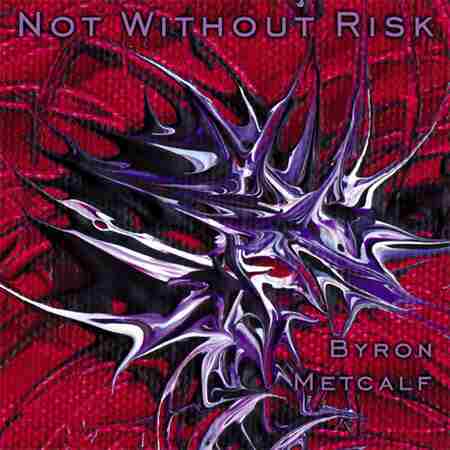
You've just had a new CD released not too long ago, Not Without Risk.
I'd like to know where the title came from and what meaning does it hold for you?
BM: The title is fundamental to my life philosophy and beliefs. As I state in the CD's liner notes: "Any worthwhile endeavor is not without risk."
My music is designed to support, encourage, and occasionally drive people into areas of the self that are often very challenging and difficult to confront. If psychological and/or spiritual work is to be truly effective and facilitate real change and transformation, then we must be willing to risk letting go of the familiar.....surrendering to the unknown. This needs to be much more than a lofty "new age" mental construct and requires a deep and personal experience with something more essential and
greater than we think we are. Sometimes a person can get into very difficult processes during the journey and there really is no absolute guarantee that one will navigate the experience successfully. True shamanic initiation is incredibly difficult and one primary objective involves confronting death, at least at the psychospiritual level. Ask anyone who's ever participated in an ayahuasca ceremony and they will probably tell you that it felt like they might "literally" die. What happens of course is
an "ego death"
or more accurately this is a psychospiritual death-rebirth experience.
We live in a society that is, for the most part, extremely unwilling to take responsibility for almost anything that might be considered negative. We want guarantees that if something goes wrong, we will be compensated in some way, usually involving some form of law suit. In my view this has resulted in cultivating a society of "victims." Archetypal psychologist James Hilman refers to this as our insistence on living in an "air bag society." This
is obviously completely naive and unrealistic and only insures that we as a culture remain psychologically and spiritually immature and cut off from our essence. Living fully and to our maximum potential as human beings requires great sacrifice and courage, and to choose this path is not without risk.
AV:
When you first conceive of a project like this what are some of your first steps on the road to making it a reality?
BM: For my own projects, I usually start by just working on various compositions and ideas and see where the process takes me. As I mentioned before, sometimes I have a general sense of where I want to go with it, but more often than not, it has its own unfolding and will end up quite differently. For example, three of the tracks on Not Without Risk were originally slated for The
Serpent's Lair project. Prior to TSL, Steve had agreed to produce my solo follow-up to my first CD Helpers, Guides & Allies, and I had already recorded some basic drum and percussion tracks for that. After Steve and I began playing a bit together, he suggested that we do a full collaboration. Of course I was honored and very excited about this opportunity and shelved my solo project until TSL was completed. Steve initially wanted to use about 3 or 4 of the drum/percussion tracks I had
already recorded and I began working on a few more. We originally had a different working title than The
Serpent's Lair and as the project developed, morphed, and revealed itself over the course of about a year, we both saw that the 3 original tracks I'm referring to no longer "fit" what TSL had evolved into and we decided not to use them. I actually was really happy about this because I then could use them in a solo project as I'd originally planned. So again, I just start experimenting, trying to create something new or something that begins inspiring a specific direction or attitude and
attempt to cooperate with and surrender to where the spirits are guiding me.
AV:
Once you reach the point where you are satisfied with a project that you have been working on, let's say Not Without Risk, what is your next step in making sure that your music reaches its intended audience? Do you handle the marketing of your music or is that in someone else's hands?
BM: For Not Without Risk,
I decided to do all the marketing and sales myself. Due to the possibilities now available through the internet, in the long run independent artists can often come out better financially by doing this work themselves. It's a lot of work, but when fans buy directly from the artist and the associated sites the artist chooses to hook up with, the integrity of the music is completely insured and the artist receives a larger percentage of the sales. This in turn helps support the ongoing creative process which I think
its a win-win for everyone. Unfortunately its rare when artists have much positive to say about record companies. However, I did have a really good experience with Projekt
Records on The Serpent's Lair.
AV:
Not Without Risk has been out for several months now, what kind of feedback have you been getting from the ambient community so far? How much does this kind of feedback affect the work that you do in the future?
BM: The feedback has been overwhelmingly positive and I've posted some reviews on my site which folks might want to take a look at. Of course I'm very pleased with AV's
(Jim Brenholt's) review.
I'm not sure how reviews actually influence or impact future work. I try to look at reviews and responses objectively, knowing clearly that any response to music, as well as other art, is mostly a subjective experience. I'm aware that positive reviews are helpful in emotionally supporting my ongoing endeavors.
AV:
Ambient Visions is an e-zine that deals in music reviews so I'm curious as to how you as an artist feel about music reviews. There has also been discussion lately as to the worth of the "negative" review and its place on a music review site, when you receive negative reviews of one of your projects what kind of response do you have upon reading it?
BM: Well again, I try to look at negative reviews objectively. If a negative comment relates to some technical aspect like sonic quality or perspectives, art work, graphics, packaging, etc., I really take a look at it to see if it has some genuine merit for me personally. I'm open to criticism and feedback if its done respectfully, and I can learn a lot from that. However, with this kind of thing, I initially prefer to solicit
criticism and feedback from those whom I trust and admire and I know who will be honest with me. If a negative review focuses on the overall project, I pretty much just ignore it unless there are several negative reviews that say similar things, which hasn't been the case at all.
AV:
How is it that you find time for taking care of the Center that you operate, conceiving of and recording new music, doing some live shows and having a personal life to boot? Do you have several techniques for keeping some kind of balance to what might otherwise be a very hectic life?
BM: Well this is definitely the most challenging edge I walk. As I said earlier, I don't do many live performances any more so that helps a lot. I'm absolutely convinced that the most important component in keeping a balance is the maintenance of my spiritual practice, which at this point is pretty well integrated into the other aspects of my life. I meditate daily, I get some exercise and try to maintain a healthy lifestyle
in all areas. I also do regular breathwork and shamanic journey work and go on a 10 day meditation retreat twice per year. Without all this, I know I would crash and burn pretty quickly!
AV:
Sort of a standard question but what is it that you listen to when you have a chance to sit down, relax and enjoy some music on the stereo system?
BM: It all depends on my mood of course, but every once in a while I really enjoy listening to old Hendrix, Beatles and Clapton recordings. Mostly I just enjoy "good"
music, regardless of the category. I've been known to listen to jazz, ambient, rock, country, and film soundtracks in the same afternoon. I also spend a lot of time reviewing different CDs that I might be able to use with my clients and/or in workshops. Most of this would be in the ambient, world, and tribal categories. And I always enjoy listening to what Steve (Roach) is up to. He's so incredibly prolific that I can count on getting turned on to something new from him at least 3-4 times a year!
AV:
Not Without Risk hasn't been out all that long but is there anything in the back of your mind that we might be looking for from you in the coming year? Any collaborations in the works for you?
BM: There are 2 or 3 projects I'll be doing this year. In April I'll be producing and engineering an ambient project for Ron Oates, the keyboard/synth player who appeared on both Helpers, Guides & Allies and Not
Without Risk. Ron's an incredible musician, composer and arranger and we've done studio work together for longer than I care to admit. Then in late Spring I'm starting a collaboration with Indian bamboo flute player Mark Seelig who lives in Germany. We will be focusing on the interplay between the flutes and percussion with some soundworld support. We are hoping to have some contributions from some other players as well. I'm also involved in negotiations with Celtic shamanic practitioner, Frank
MacEowen to produce a project for him this year which will follow-up on a book he has coming out in the Summer.
AV:
Many musicians do and many don't these days so I was curious , do you read or write music? Or do you have some sort of musical structure before you begin a project?
BM: I read drum charts but don't do much of that anymore as there's not much need with the projects I do. I don't write music per se.
In terms of structure, it totally depends on the project. In the upcoming project that I mentioned with artist, keyboard player Ron Oates, he will have a lot of the compositions already scored with some basic arrangements in place. Of course we will end up changing some of it as it unfolds in the studio. My own music is much less structured and I try to allow everything to develop itself along the way. I think one of the hallmarks of ambient music is that traditional musical
structure, in terms of chorus, verse, bridge, etc., can be more or less abandoned if desired.
AV:
Are you going to be making any live appearances during 2002 that our readers might want to watch out for?
BM: None for 2002. If the project with Mark generates enough response, we will definitely consider something for 2003. Mark is also a therapist and shamanic practitioner so I'm convinced we could create an experientially potent performance space that would have a lasting impact on all those who attend.
AV: Any final words to our readers that you would like to share as we finish up this interview?
BM: Well I'm really grateful for the opportunity to be involved in such an in-depth interview, and I enjoyed the thoughtful, probing questions. I hope those who haven't heard my music will take time to visit my website and listen to some of the mp3 tracks. Also, I always appreciate when people contact me with
reports, comments or questions about my work. And, I'd like to encourage everyone to buy directly from the artists whenever possible. It really does makes a difference! For everyone, Many Blessings and Deep Journeys.
AV:
And many thanks to you Byron for taking the time to answer the many questions that I had for you and for being very open with your answers. Good luck in the coming year and we wish you the best of success with your future projects. |