|
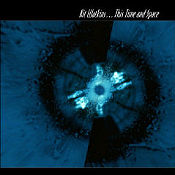
This Time and Space: |
|
This Time and Space: |
|
Kit Watkins
This Time and Space
Flying Petals
Unraveled
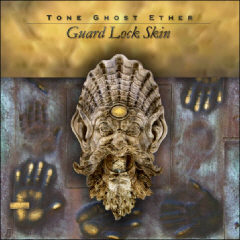
Guard Lock Skin by Tone Ghost Ether
Condor Sail Curve by Tone Ghost Ether
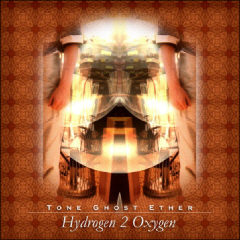
Hydrogen 2 Oxygen by Tone Ghost Ether
The White Space by Tone Ghost Ether
The Gathering Set 1
The Gathering Set 2
Rolling Curve
Unseen
Thought Tones Vol 1
Thought Tones Vol 2
|
AV: Where does your love of music come from and when was it that you decided that writing and composing music was the path that would offer the most fulfillment to you? KW: My parents were both classical piano teachers, so they started me out on piano at an early age. So, I suppose I received a double dose of genetic predisposition to music, as well as being exposed to it in the household from the very beginning. I can't say I loved playing the piano, because I remember that I avoided the daily practice schedule my mother imposed on me, but in retrospect, it gave me an excellent foundation, especially regarding technique. When I was about 13, I asked my mother if I could stop piano and start playing in the neighborhood rock band. To my amazement, she said yes -- she knew that's what I wanted, and was very supportive, rather than trying to force her preferences on me. That's when I started to really enjoy music more and see it's power and influence -- pop music was connecting with my heart and soul in a much more immediate and fun way than classical had. I enjoyed learning to imitate other musicians, and figure out chord changes and melodies -- it was great ear training. I seemed to gravitate toward progressive rock as I got further into my teens -- I suppose the mixture of classical and rock music combined elements that I enjoyed about both. ELP, Jethro Tull, Yes, Genesis, Gentle Giant, on and on. There were so many original and innovative progressive bands back then. When I joined Happy The Man, I was 19 and had just started to write so I was a bit of a late bloomer regarding composition. I dropped out of college during the first semester of my freshman year because I really knew that I wanted to pursue music as a career, although I had no clue as to how to go about that (still don't, 30+ years later). Music was in my blood -- the mystery, the magic, the emotions fused with the intellect. AV: Knowing that you have long and varied career that brings you to where you are now could you give me the cliff notes version of the more important aspects of your musical career to this point. KW: 1973: Joined Happy The Man (HTM) and began writing music in earnest. Worked a day job in a factory. 1976: HTM signed with Arista Records, and recorded first album at A&M Studios in Hollywood with British producer Ken Scott (he'd engineered and/or produced The Beatles White album, David Bowie, Mahavishnu Orchestra, Supertramp, Dixie Dregs, among others). Still working a day job, because Arista contract didn't pay wages, and record sales were disappointingly low. 1978: HTM recorded second album for Arista, in L.A. again, with Ken Scott producing. I worked side by side with Ken as the point man for the band. Still working day job, since record sales didn't pick up. Arista dropped HTM because of low sales. 1979: Left HTM to join British progressive-rock band Camel. First paying job as musician, although I had to take a back seat creatively and ended up being more of a session player. Recorded an album "I Can See Your House From Here" with Rupert Hine producing. Toured Europe and Japan with Camel. No more day job, although struggling with little income and dissatisfied not pursuing my own musical vision. 1980: Left Camel after having my material rejected, and recorded my first solo album "Labyrinth" with former HTM band mate and drummer Coco Roussel. 1981-82: Still a starving artist, so went on the road with Camel again for the "Nude" and "Single Factor" tours in England and Europe. 1982: Released second album "Frames of Mind" with Brad Allen. Last live performance of my career (until The Gathering in 2001). 1983: Met my partner Bob Toft, and essentially quit the music business as I knew it, in order to pursue a grants newsletter business with him. This soon became my bread and butter, and continues to this day. No longer a starving artist. 1985-1990: Recorded and released "In Time," "Azure," and "SunStruck" for the East Side Digital label. 1991: Started a new label, Linden Music, for release of my alter-ego forms of music at that time (mostly ambient). Other artists such as Jeff Greinke, Robert Rich, and David Borden were released on the label. 1996: Distribution dried up for Linden Music and the label folded. 1998: MP3.com became my new outlet for music. 1999: One Way Records re-released 4 of my "classic" albums (Labyrinth, SunStruck, wet dark and low, Holographic Tapestries). 2001: The Gathering concert in Philadelphia -- my first solo performance ever, and first time on the stage in 19 years. 2001: Tone Ghost Ether improvisational ensemble formed. 2003: MP3.com goes bust. New outlet for my CD catalog found at CafePress.com. 2004: Several new CDs of ambient and progressive world-fusion released at CafePress.com/KitWatkins. AV: Now that makes for quite an impressive resume. Tell me about your introduction to what is called ambient/space music and what were your initial reactions to this style of music? KW: I bought my first Revox reel-to-reel tape recorder in 1973 and started experimenting with sound-on-sound recording, and even dabbled a little at what would probably be called "musique concrete." It wasn't really ambient music, although some of the pieces did lack rhythm and weren't musical compositions in the traditional sense. They were very experimental -- designed to create a mood or feeling, even if somewhat jarring (banging on a spring reverb, or using drumsticks on the strings of an upright piano lying on its side, reversing instruments, using natural and found sounds). Some of these experiments ended up being played during HTM concerts as parts of songs (introductions or endings). Probably my first big influence with ambient music was Wendy Carlos's "Sonic Seasonings" in the mid-70s. Also, Eberhard Weber's "The Colours of Chloe" and "The Following Morning" had some spacey parts that I loved. Then, when Brian Eno started his ambient series a few years later, I naturally gravitated toward what he was doing. As far as electronic space music, I had heard Tangerine Dream and Klaus Schulze and others, but didn't resonate with it at all. It seemed so cold and mechanical. I became much more interested in that form of music with Steve Roach's work, which took it to a new level that I could feel and relate to. AV: Music like many other interests in our lives tend to grow and evolve over time, once you were exposed to ambient/space music what kinds of changes took place in what you were composing and playing? KW: Well, it's hard to say specifically regarding my non-ambient releases -- because, for those, I was still thinking compositionally in terms of more traditional music (chords, melodies). I had always been experimenting with other forms, but just not pursuing them front and center. When I started Linden Music, I had an outlet for these other forms, so released the Thought Tones series, as well as Circle, the latter being a direct influence from "Sonic Seasonings." AV: There are times when many of the styles of music that make up this genre (ambient, new age, space, world, electronica, jazz) tend to overlap on one another, when you describe your music to others do you try and place it into certain categories or do you let it fall where it may? Why? KW: Oh, I let it fall where it may, simply because categories are so restricting. I would lose interest if I had to mold my music into a cookie-cutter kind of thing. So, for me, avoiding the pigeonholes and trying new forms is simply a way of keeping myself engaged and sane. I abhor staying in one place, almost as much as I dislike music built on cliche. AV: Having had a variety of music styles in your background, how do they help you express yourself as an ambient musician? KW: Ironically, it's somewhat the other way around. Ambient or minimalist music helps me shed the traps inherent in learned music and technique, and therefore allows me to express myself better when I'm in non-ambient mode. AV: Tell me about your first CD release that you could actually call "ambient music" and what was it that led up to its release? What kind of reaction and responses did you get from your listening audience and reviewers? KW: Thought Tones Volume 1 would be the first entirely ambient CD, although I'd been creating somewhat ambient pieces from the very beginning of my solo career: "Cycles" at the end of my first solo CD "Labyrinth" in 1980, "Innocent Adventure" from "Azure," and "Mirage" and "Canopy" from "SunStruck." "Thought Tones" actually evolved out of the initial work on "Circle." I was creating drones of various kinds to place within the context of crickets and other natural environmental recordings, and was listening to the drones in isolation, realizing that they had a lot more intrigue and mystery alone. So "Thought Tones" really happened more as a tangent than an intention. The responses were very positive and encouraging. I'm sure some of the die-hard prog-rockers in my audience didn't relate, but they mostly kept quiet (that's my first rule in creating ambient music: learn to be still) so I guess there's hope! AV: In the early 90's you formed a new label called Linden Music which included the likes of Robert Rich, David Borden and Jeff Greinke. First off how was it that you had started to make contact with some of these artists and what were you hoping to accomplish with the formation of this new label? KW: My distributor for Linden Music was Steve Feigenbaum of Cuneiform Records, and he introduced me to Jeff Greinke, who I had never heard at that point (early 90s). I loved what Jeff was doing (and still do) and approached him about releasing something. Robert Rich was an acquaintence of Jeff's and contacted me about his "Numena" and "Geometry" releases, having had trouble finding a domestic label for them (they had been released in Europe previously). David Borden was a Cuneiform artist, and he had this great CD "Cuyuga Night Music" which didn't fit into the Cuneiform style, so I was thrilled to be able to release that. My idea with the label was simply to try and become more self-sufficient with my own music, as well as have some like-minded quality artists to release, and therefore create a niche market for an ongoing catalog of musics that interested me. It was a great ride while it lasted! AV: From your last answer it sounds like Linden Music is not still a viable entity, if so when was it that the label ceased to be and why did it disappear? KW: Linden Music closed down in 1996. Distribution dried up -- mostly as a result of Tower Records (one of our larger buyers) getting rid of smaller accounts like ours. Tower was hit with losses, not being able to compete with stores like Best Buy who were selling CDs as loss leaders (items sold at no profit, in order to entice buyers into the store to sell them other items in which the store does make a profit). And since Tower only sold CDs, they couldn't compete and had to scale down. I tried to get new age and other independent distributors interested to no avail, so finally gave up. AV: How much more difficult is it to be an artist and to be the one who runs the label as well? What kinds of additional responsibilities do you have taking care of both roles? Is it something you'd recommend to those who can not find a major label to release their music? KW: There's a lot of administration involved with running a record label, and that's time consuming and not particularly a lot of fun, unless you love accounting and such. I don't recommend it to individual musicians now since the internet provides a more cost-effective and rewarding outlet (for having your music heard via streaming and downloads, and for creating and selling on-demand CDs). MP3.com had a great thing going, and hopefully CNET will provide an even better service and artist community, once they launch their new service. AV: Where do you look to find the inspiration for creating your music? Is it something within or something without that offers you the most inspiration? KW: For me, creating music is mostly an introspective endeavor, although I often need external stimuli to get me started. I find other people's music can do that, or even something not related to music -- something visual perhaps. Sometimes I get an idea that feeds off of another idea I started on, which is where Thought Tones came from. In general, once I get going with the creative process, it becomes a solitary and introspective ordeal. I can really get lost in it, especially when things are really falling into place. But, like a lot of creative work, there's the 99% perspiration - 1% inspiration thing happening too. I spend a lot of time getting my instruments and setup and technical ducks in order, and it can be painstaking at times. Then, once everything is fairly in place, hopefully the inspiration will follow suit. AV: Tell me about a typical day in the studio and how you go about creating, editing and mixing ideas into something that most of us enjoy listening to. Any particular instruments that you are partial to during this creative process? KW: Well, there's really no such thing as a typical day when it comes to my creative process in the studio. That's because I'm always looking for another way to keep myself interested, so I tend not to repeat past methods or approaches, at least not in a literal way. Usually, I've become infatuated with some instrument or idea, and want to pursue some means of expression with it. For example, a piece on "The Unseen" called "Logarhythm" was based on a log drum (tongue drum) improvisation. Once I got started on that, I started imagining and experimenting with things to add. Most of what I do is based on intuition mixed with trial and error -- leaving myself open to using mistakes or whimsy, rather than having to follow "oughts" and "shoulds" which my mind will tend to dictate. In the past, I was much more formal about music composition, but nowadays I'm more fascinated with the mystery inherent in things less structured and more abstract. If I can create something that I don't understand, that's a good sign. I believe I'm paraphrasing John Cage when I say that. He had it right. AV: Are musicians like writers when it comes to hitting a wall and experiencing writers block? What do you do to break out of "writers block" and get the juices flowing once more? KW: I do get writer's block as a musician, but that's more a mental condition of being in negative space or even depressed, more than anything else. In general, if I can get myself motivated to start creating something, even if I'm not particularly in the mood, I can often get pulled into the process -- sort of a snowball effect. For me, it's really just a question of taking that first step and making myself get out of my comfy chair. AV: Has the entire process of creating a body of music for CD gotten any easier over the years with each successive release? KW: Yes. I used to sweat over the most minute details that nobody else had a clue about. Now, I'm a lot sloppier with production, and it's great because I can concentrate more on what I'm trying to say, and less on whether it's 24-bit or whatever. I've given up being such a control freak, and have learned to enjoy the wonderful world of mistakes! I also utilize improvisation much more than I used to, sometimes exclusively, and I love the immediacy that comes with that. AV: Are there any of the CDs that you've released over the years that are milestones to you in as far as your development as a musician? What was it about these pieces of music that make you feel they are special in the overall scheme of things? KW: Each CD has been a learning experience and has usually represented a different direction from the previous release. So, there has been a cumulative growth I suppose, and maybe even some unlearning. In that regard, Thought Tones was a milestone simply because it was the ultimate letting go of ego, of control, of needing to prove something or impress somebody. It was quite a paradox because I worked very little to create it, but found it immensely rewarding to listen to. And, it still holds up for me in ways that some of my other CDs don't. Of course, this is only my perspective because what I'm talking about is familiarity with my work. I know my other CDs so well because I crafted them in a slow, methodical, and painstakingly repetitive way -- so much so, that when I hear them, there are no surprises for me. With Thought Tones, there's still something unknown about them that keeps me mystified, maybe because there's a lot less of "me" in them. Another milestone for me was The Gathering concert, because I stepped more into the unknown with some of the pieces performed there by trusting my ability to improvise my way through them. There were certainly a few tunes that were totally structured, but there were also quite a few which I left somewhat open. It was scary and new for me, but ultimately the most rewarding live experience I've had. Following the concert, I did an hour-long live improvisation entitled "music for the end" on the Star's End radio show. Again, this was a milestone for me because the entire piece was created on the spot without a safety net -- I had only prepared the patches on the keyboard and electronic wind instrument, and had some environmental sounds prerecorded that played in the background. AV: You are also involved with another project called Tone Ghost Ether, what is Tone Ghost Ether all about and what prompted your involvement with this side project? KW: TGE grew out of Sunday afternoon jam sessions for fun, using my live performance setup for The Gathering. Brad and John would come over and we'd spend 4 or 5 hours playing, with no preconceived notion or plan -- one of us would just start something and we'd go with it, sometimes ad nauseum! But, oftentimes, the music just spontaneously fell into place. Fortunately, I had the tape recorder running to capture most everything. We did this for a number of weeks and accumulated a large amount of material -- the best of which was released on the initial 3 CDs in 2002, and then a 4th CD just recently (February 2004). It's some of my favorite music to listen to because the sound is so different, fresh, and unusual.... not composed or stiff at all. Unfortunately, I'm now living 5 hours away from Brad and John, so we won't be able to continue TGE very easily. AV: You mentioned the internet as being a very useful tool for the independent musician to get their music out to the public, what kinds of changes has the internet brought about as far as distribution and marketing of music up to this point? Another aspect of this question has to do with where it is heading to in the future. Are physical copies of the music on CD headed for extinction in the future due to other delivery methods? KW: The big change with the internet is that it gives musicians direct contact with listeners. It's a new avenue for getting the music out there, and it's great because it disposes of the middlemen. For independent musicians like me, it really has become our lifeblood. Before the internet, my music could only reach the listeners if a record label or distributor decided to take it. And, as mentioned previously, that's why Linden Music went out of business -- by 1996, the distributors were all saying "no." Independent musicians are no longer at the mercy of the middlemen, and that's a very good thing for opening up artistic expression worldwide, and especially in the U.S. where music has become so extremely market-driven. The internet really is a godsend. Where is the internet headed? Hopefully toward more openness and accessibility. With regard to music, I do think that the CD will continue its viability the same way magazines and books have, even in this "paperless" age. Sure there are plenty of people who download music and burn it to CD-R, but there are also lots of people who still prefer to buy the pre-packaged music and artwork. It's less hassle and looks a lot better too. AV: You had just mentioned that you enjoy improvisation quite a bit in creating your work and as luck would have it your latest release "This Time and Space" which is just out, is also an improvisational CD. Tell me what listeners are likely to find on this new CD and a little bit about how you improvise an entire CD and yet maintain continuity for the piece as a whole. KW: "This Time and Space" is a collection of unintended improvisations. In other words, I wasn't specifically thinking about creating a new CD when I played the pieces. I was simply improvising in my live performance space at different points in time. I collected the recordings and was sifting through them last summer, and burned a CD-R to listen to in my car. As I listened to the pieces, they began to sink in and improve with age, which is always a good sign. There were two or three pieces that didn't hold up or seemed out of place, so I removed them. And, one of the pieces had a rhythmic introduction which I decided to cut in order to keep the ambient continuity. The instrumentation is somewhat limited because I was working with my live performance setup only ~ electronic wind instrument, synthesizer, some light percussion ~ and this gives the individual pieces a similar quality, which is why I believe they work so well as a group. AV: Over the years your musical instruments and equipment have obviously changed, do you find it easier to use the current crop of technology to create your music with or does it make no difference at all to what you do? KW: It makes a huge difference -- the instruments and technology I use are essential to what I create. Technology has certainly evolved, but I still enjoy some of the older gear as well, within its limitations. The main electronic technologies I rely on now are virtual modeling synthesis, sampling/synthesis, and hard disk recording. In the last few years, the electronic wind instrument (with virtual modeling synthesizer) has become one of my central voices. But, I'm not satisfied with working solely within the electronic domain. I usually prefer to combine electronics with acoustics. I have a rather extensive collection of acoustic sound sources -- non-traditional instruments like the waterphone, as well as traditional percussion, drums, guitars, etc. And, of course, there's the grand piano which is one of my favorite "technologies" of all time. AV: Do you ever hear the criticism that ambient music is not music at all because it has very little structure to it in the sense of notes written out on a page. How do you answer those who think less of ambient/space music simply because it does not follow the same rules as say classical music and appears to certain listeners as random sounds generated on a keyboard? KW: I don't give critics much credence, so there's really nobody to answer to. The only purpose of criticism is to help justify someone's insecurity about his or her subjective preferences. It's a comparative exercise that really has no value, in my opinion. However, I believe music reviews (not music critiques) can be helpful when they describe music and guide listeners with objective points of view. Those who would compare ambient/space music to classical (or to rap or to jazz or to the myriad of other musical forms) are comparing apples to oranges. The bottom line is that all music is valid, even if nobody hears it. I play a lot of music without recording it, simply for my own enjoyment. AV: January has seen two releases from you, the second one being unraveled. It is a shorter CD but with a definite purpose in mind during the creation, tell me about what it was that prompted this piece of music. Since music can not tell a specific story to the listeners do you go out of your way on a piece like this to explain to your listeners why it came about and what it means? KW: In this case, I did describe why "unraveled" was created. Essentially, it was my reaction to the impending, illegal war in Iraq in February 2003. I felt (and still feel) much dismay at what the Bush administration has done in our name. The French-bashing by the right wing in this country was an abomination, in my view. In the past, I've bitten my lip and stayed out of the political arena when it comes to my music --during the Reagan years, for example. But, Bush and Co. are so extreme and so dangerous and despicable, that I feel we must speak out against the insanity. "unraveled" is a combination of political statement/reaction and artistic sentiment designed to provoke various responses from the listener. It's also open to interpretation, but I'll put in my 2 cents. The first piece has some dissonance, and could represent the dissonant mind of those who would use power and greed to start a war. The second piece has a sadness to it, which is the inevitable result of the destruction of a country, and the lives lost. The third piece is calm and peaceful. It represents hope that justice will be served, and that good people will eventually prevail. AV: It was interesting that you drew on a classical composer for unraveled, do you find that there are other classical pieces that find their way into your music even if on a subconscious level? KW: Ravel is one of my favorite classical composers, and it was fitting that he was French as well (for most of his life, at least). My influences from classical composers, especially the French impressionists, as well as modern musicians, probably works its way into my music through my subconscious. It's difficult for me to be aware of it, however. I don't hear my own music very objectively, as others might. I do know that I'm not consciously trying to blatantly imitate another artist (most of the time). AV: Do you do a lot of "live" performances or was The Gathering a unique experience for you? Do you plan on doing anymore of this kind of performance and if so where might some of your listeners be able to catch you doing your thing live? KW: I haven't performed again since The Gathering, for a variety of reasons -- primarily because of moving twice since then. It's something I want to do again, but at present I am not working toward that simply because I have other priorities that are taking my time. I'm living in Raleigh now, so I expect any concert I perform would be in this area since any kind of traveling or touring is out of the question, given my present circumstances. AV: I hope that this has not been too torturous for you but I am glad that you took the time to talk to us here at Ambient Visions. Thanks so much. Are there any final thoughts that you would like to leave with the readers of AV about your music or where you might be heading in the future? KW: Thanks Michael. I enjoyed the interrogation, I mean interview! For those readers interested in progressive world-fusion, there's another new CD that I released in January called "Flying Petals." More info and sound clips are available at my web site: KitWatkins.com AV: It has been a pleasure talking to you and one of these days when you do another live show beyond your home town area I do hope that I get to attend. Until then smooth sailing with all of your projects yet to come. |