|
Sanctuary of Dreams: AV Talks with Numina ©2004 AmbientVisions |
|
Sanctuary of Dreams: AV Talks with Numina ©2004 AmbientVisions |
|
Numina
The Haunting Silence
Recluse
Transparent Planet
Dreamsleep |
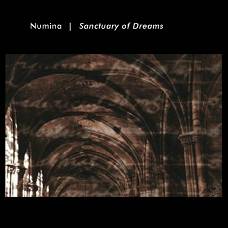
AV: Tell me about your longstanding interest in electronic music and why it was so interesting to you from a very early age. What was it that attracted you to this form of music as opposed to the "pop" music that seems to permeate our culture these days? Numina Well, it all started when I was just old enough to twist knobs and push buttons really... well, shortly after anyway, I suppose I first started out with a rattle and then came the tribal percussion of the baby drums. My Dad was a professional musician and the very first synthesizer I remember fiddling with was his miniMOOG, which pretty much captivated me. My dad would have the miniMOOG set up in the living room where he'd practice with it. He let me wear these big bulky headphones that kept slipping off my 7-year old head and I just remember making lots of noise with it. My dad passed away in 1988 and I now own that miniMOOG, and a couple other of his synthesizers. As my musical taste evolved, I found myself drawn in to the more thematic and mysterious side of things. Throughout the 80s & 90s I was really into new wave, industrial, shoegaze, and new age music. Something about the minor chords and mysterious timbres of the thematic and "darker" styles of music really clicked with me. The music provided the soundtrack to the way I felt about life, about the world, about the landscapes and the space beyond this tiny blue marble known as Earth. The first "new age" artist I discovered was Steve Roach in 1988 with his release "Dreamtime Return" which became a pivotal moment in my life. I looked at "new age" in a completely new light and not the cliche it had started to become. I realized that there is a substance and feeling invoked with new age instrumental music that most other genres can't connect with me. Nowadays, the market for this style of electronic music has expanded and diversified to incorporate all sorts of influential styles of music including ethnic variations mixed with acoustic elements and electronics and vocals, all of which really make this genre all the more interesting. AV: Did you ever have any formal music training during your earlier years? Is formal training in music something that is not as necessary for composing music in this genre as in other music genres? Numina: I never really had any formal training. I took the obligatory violin class in grade school, and saxophone in middle school. I wish I had taken on more music studies. I was so busy collecting records and listening to music that I didn't stop to think about being creative myself until later in my life. Formal training in music is rare these days, at least from my understanding. I also don't think formal training is necessary, and in some cases I know that it can inhibit creativity in that some artists I know are so stuck in a way of thinking about how to write and compose that they can't engage in a more free-form way of composing, which is more along the lines of how I look at recording and composing. My family has an extensive musical heritage, so it had come natural to me... it had been brewing in me for many years. AV: When was it that you actually began to listen to other performers in the electronic music field and what were your impressions of the music that they created? How did these musicians influence you as you were in the formative years of your own style of electronic composing? Numina: My first exposure was through Hearts of Space radio back in the 80s. I pretty much made it a priority to listen to the program every week. I found the music liberating and unique, thought-provoking, and intelligent. The influences of the electronic music genre are undeniable and apparent. But so are the influences from other sources and music styles. I think it's dangerous to say I'm influenced by so and so because it may appear as if I'm not independent with the creative flow, which is not the case since each composition is a clean slate of work and any previous conscious influence is out the door once the music begins to flow. I do believe, however, that artists should recognize the doors that were opened by their predecessors in the genre. In my case Steve Roach, Robert Rich, vidnObmana are all excellent examples of who have inspired and made me recognize the bounds they crossed which opened up new worlds of music and sound design. AV: When you finally decided to explore and experiment with electronic synthesis, what kind of equipment did you start with and how did you go about the process of dipping your toes in the water so to speak? (for clarification When someone decides to become "fill in the blank" what steps do you go through to put yourself on that path and begin moving towards your goals) Numina: In addition my Father's synthesizers I had, I purchased a few other more modern synths, namely the Roland XP-80 which served as my all-in-one recording machine. It has a built-in sequencer and allowed me to layer several tracks at once which is what I needed to mix down to a two-track. I was really behind the times with recording equipment when I first started out, which I regret. The allure of the gadgets and other noise-makers blinded me a bit and took away the focus of what it was I needed. The "toe-dipping" came naturally to me. It is similar to that feeling you get when you have never tried something but know you could do it. I knew the structure I wanted, the timbre, the sounds, the vibe. Everything was in my head and I knew just how to lay it out. It took little effort to convey my feelings through the music. I also do a lot of programming of the sounds I use to make it uniquely my work. AV: Since music is a medium that lives and breathes emotions and feelings, how is it that you as a musician bring your emotions, ideas, philosophies and feelings to bear on the music that you create? Do you consider a comment from a reviewer or listener about your music evoking certain feelings in them a success if that was the feeling or emotion that you were trying to communicate in your music? Numina: The music is indeed in every way a means of personal expression of my personal emotions and feelings. There was hesitation initially whether or not I wanted these feelings to be known/heard by everyone. But there came a point where I felt like sharing it and it felt good. The music offers the listener to interpret and extract their own emotions from the music and hopefully it does just that. I want the music to be intelligent, interesting and open to interpretation by others. I enjoy the interpretations from reviews, and oftentimes the comments are exactly what I was hoping for. It means I was successful in conveying that emotion or feeling. Although, I think it's difficult to NOT convey certain feelings in this particular genre. So a lot of the resulting review comments are not necessarily surprising to me. Sometimes the way I am feeling also dictates the process in which I record. For several years now, most of what I do is all real-time live work. I am relying very little on tight sequencing because I think that can sterilize the mix. Even in the case of the percussion work, whether it is sample-based sounds or acoustic recording in my studio, I am recording these original phrases in real time, I will then loop these phrases, but I do try to break up the monotony of a heavily structured mix and let the music flow a little bit more naturally. I also am using various synthesizers with real-time sonic adjustments added to the mix, this allows me to create something that truly is "live" and non-repeating sounds. AV: Is there any relationship between the feedback you receive from listeners and reviewers about your music and what it is that you might be inclined to create next? Or as an artist do you simply create your music for yourself with no thought of how it might be received when it is released on CD to a wider audience? Numina: Constructive criticism is always an interesting read. Some of it is worthwhile and valid when it talks about the quality of the mix, but I don't conform to someone's opinions on what the song should sound like musically. In fact, that hasn't happened to me really, so it's hard to comment on how I might react. The only times when I conform the music to what someone else wants is when it's for a special production for say soundtrack work, or loops. The music is first and foremost created for myself and involves personal experiences and interactions in my life. Much of it is personally spiritual and healing, while other approaches to composition are influenced by personal relationships. That's not to say that I don't want the listener to enjoy the music - there is an underlying conscious tendency to consider how a particular song might be perceived by another. So, I do try and conform the music to be interesting, entertaining, adventurous, and captivating as much as I can without limiting my own personal adventure. AV: At some point you decided to share your music with others just to see what would happen, when you put up your MP3.com site (before MP3.com disappeared) what were your expectations for this sharing of your music? Is this a vulnerable moment for a new musician, the first time sharing of something that is private and personal with a much larger group of people and did it make you feel just a little bit apprehensive? Numina: I was apprehensive I suppose. It was around 1998 when I posted (released) my first works on mp3.com to the public to hear. Since not having released music prior to posting to mp3.com, my expectations of responses from the public were really low. What resulted was quite the opposite. The praise certainly contributed fuel to the creative fire, gave me an boost, and reinforced to me that what I was doing was good for me, and others are enjoying it, and finding my material unique yet fell well in the niche of ambient music. And now not only was I creating the music for myself, but for others to enjoy. This realization was a win-win situation for me. The final download count on mp3.com before it shut down was over 300,000 downloads. This statistic was not expected, but was a great compliments and a testament to the music being what people want to hear. AV: When and why did you feel motivated to release your first CD? Tell me about the process of choosing the material for that first CD and how you went about getting it into the hands of the listeners who wanted to hear it? How difficult is marketing and distribution of music that is handled by the artist instead of a label? Numina: The first self-produced CD I released was "Evolving Visions". Evolving Visions was the catalyst for what Numina was destined to be. Evolving Visions contains 10 tracks including two previously released tunes from mp3.com. Evolving Visions also features vocals by Tara VanFlower (solo musician and from the darkwave band Lycia) on the track "Pearl". I had a lot of time and freedom when I put that recording together. Initially, there were plans for Evolving Visions to be released on the now defunct Greenhouse Music label (based in Minneapolis) but things sort of fell through on my part and as time progressed the opportunity there was lost and so I decided to release it as a self-produced CDR. Something I don't at all regret, although I will admit a proper pressing would have been optimal for the obvious reasons of appearance and longevity, but the CDR process holds up really well and I think the reputation and quality of my CDR releases proves that. I didn't so much choose the material from a pool of songs, rather I recorded material specifically for the concept of Evolving Visions. The concept being something between visions of outer space and earthly elements, a journey, and a conclusion. That release was my first true endeavor into marketing and promo of my music. It wasn't easy, but I went into the whole picture knowing it would cost me a lot both financially and timewise. I wanted it to be quality work. I got in touch with Jason Sloan who designed the artwork for me since I really love his work. he too is a talented ambient musician. the artwork was perfect and fit the vibe of Evolving Visions. AV: When was it that you first became aware of the Hypnos label and what were some of your first impressions of the music that they were releasing? Numina: I've been following the releases on the Hypnos Label for quite some time, starting with the Various Artists release titled "Weightless, Effortless", then on to some other titles by Richard Bone, vidnaObmana, and Robert Rich. With the combination of the sound quality, production quality and appearance the label put forth I soon realized the potential and prosperous future the label would have. I've always been a fan of this genre of music, so I was quick to support the label and purchase several titles throughout the years. AV: At the time did you think that your music might fit the Hypnos style? Numina: I did. I think that my early works fit the vibe of Hypnos rather well, at least it seemed to me that it would've fit with the Hypnos label as much as any other comparable labels. In addition, I liked the vibe and image the label presented for itself. It appealed to me and I support that level of independent dedication that M. Griffin (Hypnos label owner/founder) put into the concept and appearance of the label. Hypnos has been around now for a relatively long time and I think it proves to be a great label for both fans of electronic music and the artists who continue to be released on Hypnos. AV: Let's zoom ahead a few years, your latest release, Sanctuary of Dreams, was actually released on Hypnos. Tell me about how it was that Hypnos became aware of your music and how it came to be that Sanctuary of Dreams became a Hypnos release. Numina: Well, I was first introduced to M. Griffin while I was in Portland Oregon (home base for Hypnos) in 2002 for the Paul Ellis and Steve Roach show. There was a little pre-show gathering and M. Griffin and I had briefly spoke about my music and based on the positive responses he'd been hearing about my music that perhaps a release on Hypnos was a likely possibility. Over the course of the next couple years, I worked on various projects, some of which I released on mp3.com DAM CDs, CD-R, and songs I set aside for a possible professional release. Eventually I collected a group of songs that, to me, all fit the right vibe for what has become Sanctuary of Dreams. AV: Sanctuary of Dreams is an interesting title, what is the concept that lies behind the music of SOD? Did you start out with this concept when you first started creating the music that would become Sanctuary of Dreams? Numina: The title "Sanctuary of Dreams" really just came to me rather naturally. As one who suffers from an array of medical problems, most notably arthritis, I take quite a bit of medication. This medication induces some extremely vivid dreams. On a nightly basis I'd have those sorts of dreams that you wake up from with the lingering publication of what it meant... it stays with you throughout the next day. Dreams that range anywhere from incredibly emotional to science-fiction bizarre. And I loved it! It was a great trip and my when I slept, I had no pain, and it's a place I really enjoyed being rather than awake and in pain as much as I was. So, in essence, my dreamstate was my favorite painfree "sanctuary of dreams". Currently, I'm not taking those same medications that induced the vivid dreams, and I must say that I'm having far less interesting dreams, and furthermore I don't recall my dreams as much as I used to. The good news is, though, that my arthritis is much less painful these days. My process for recording music varies, but the key element that connects everything is to make the songs musically cohesive so that they work well together whether in sequence or as a whole, yet I want the album to be diverse enough to maintain attention and avoid monotony. I didn't go into any preconceived theme when I ended up with the tracks for Sanctuary of Dreams - with the exception of perhaps one or two songs which by that time I had most of the album tracks already assembled. As previously mentioned, I had a stockpile of tunes that I picked out that fit the vibe and era in which the album is trying to convey. AV: When you turn in your finished product ( in your eyes at least) to Hypnos what is the process at that point that leads to a shiny new disc being released in a Hypnos case? Do you and the label work out what kinds of changes that need to be made jointly? Numina: Well, for Sanctuary of Dreams, which was truly my first "real" CD, I commissioned M. Griffin to perform the mastering. This was a fairly painless process, although we did bounce a good 4 or 5 versions before I approved the one which is released. I was able to get the mix just the way I wanted and needed it to be. So, the mastering process ended up not being too painful for M. Griffin. The final job of the mix is to get the audio levels and eq just right so it sounds good for all forms of playback media. M. Griffin handled everything perfectly as far as what I wanted from him and the changes I felt were needed. He was very receptive to my requests and did an excellent job. Working with him was great. All the while the mastering efforts were taking place, we were also reviewing the artwork layout and credits. The cover artwork was designed by R. Chris Fraley, who is based out of Chicago. I just came across some of his artwork he had on his website and I connected with it right away. I asked if I could use it for Sanctuary of Dreams, he kindly allowed me to use it, and the rest is history. AV: Do you ever wander around the web and read the reviews written about your music just to see what folks are saying and what kind of reception has Sanctuary of Dreams had since it's release awhile back from listeners and reviewers? Numina: I don't specifically search for reviews of my work, but when I come across them or they're sent to me I certainly read them. I enjoy reading the reviews. Good or bad, it is all good to me. I've been very lucky that Sanctuary of Dreams has been very well received and I have yet to come across a negative review for it. It continues to receive consistent airplay as well even after having sent out pre-release promos back in March 2004. AV: When you go from releasing your own material to having a CD issued on Hypnos is there a feeling of having made it as an ambient musician and does this also raise the bar on your next release? Numina: Yes! There is indeed a great feeling of pride knowing that someone else believes in me enough to invest their money and time in my music and pay for everything to produce a product, and pay me for the music. It feels really good, and quite honestly, it's not something I take for granted, and nor will I with future releases. My appreciation for the support will never fade. To some degree, I think there is a higher level of expectation for my follow-up release. However, I can't concern myself with what people are expecting from me. While I want it to be every bit as good as Sanctuary of Dreams, I need to focus mainly on the true creative process from within, and let the music let it become what it does. I will still maintain a high level of production and care with each song, and will strive for something unique and interesting. We'll just have to see/hear what happens. AV: Tell me about your experiences working with Tara VanFlower. Numina: I am very fortunate to have been able to connect with Tara VanFlower. She's both a solo artist as well as wife of and co-writer with the man behind the band Lycia. Her voice, to me, sounds absolutely beautiful and flows so well with my music. Along with the beautifully full, warm, and rich melodies she puts forth, she also has this sweet innocence in her voice that, I think, casts a whole unique element to the mix. I look forward to working with her vocals with each release, it always makes me feel good. AV: Tell me about the feedback that you have received from your listeners about Sanctuary of Dreams. Numina: Fortunately, it's all positive feedback! Many have said that they've fallen asleep before getting past the first few songs, which hopefully doesn't mean it's boring. Others have commented that it's very calming, mysterious and thematic, all of which means I hit the center of the target. So, in a nutshell, I have been blessed with positive response to "Sanctuary of Dreams". AV: Getting airplay and spreading the word of a CD's release is a critical function of marketing any release, tell me about what you do to market your music to as wide an audience as possible. Numina: For "Sanctuary of Dreams", I had sent out several pre-release CDR versions to radio shows and reviewers in an attempt to create a buzz for the release. I believe this worked well to my benefit even though the cost and time involved in doing such a promo won't allow me to do that again. Aside from that, I didn't do much else as Numina as an ambient name had a bit of an established presence in the ambient community already, so I was fortunate to walk into that situation with my first official CD release. AV: You also received some airplay on the Hearts of Space radio program, how did that come about and what were your feelings at having your music exposed on that program? Numina: Well, what can I say, being played on Hearts of Space, twice, is pretty much the pinnacle of my career. To be played on HoS is no easy feat and it just reinforces that what I'm doing is what people enjoy listening to. Being played on HoS came about after sending promo copies of "Sanctuary of Dreams" to Steve Davis and he passed it on to Stephen Hill who, fortunately, likes the album. The rest is space history. AV: Tell me about some of the projects that you have worked on since the release of Sanctuary of Dreams especially your forthcoming release Eye of the Nautilus and the collaboration Starfarer's Tales Vol. II and Inside the Hollow Realm. Numina: I'll start off with Starfarer's Tales Vol. II, which is a collaboration with IXOHOXI and is now available, is our follow-up to Vol. I (of course). Starfarer's Tales Vol. II picks up where Vol. I left off and is even more spacey and rhythmic than Vol. I. It's been great working with IXOHOXI, his work is a perfect balance to mine. "Inside the Hollow Realm" is a collaboration with ambient/experimental artist Caul and was recorded throughout 2003-04 and released on Denver-based Gestalt Records. Essentially, Inside the Hollow Realm carries on the Numina tradition of brooding emotive ambient soundscapes merging with Caul's dark drones. Caul (AKA Brett Smith) and I hooked up in 2003 and things just took off from there. Working with Brett was a wonderful experience as well. A follow-up is in the talks, but probably won't see light of day until late next year. The next collaboration currently on the burner and in the infant stages is a joint effort with Mike VanPortfleet (formerly of Lycia). I haven't had time (or energy) to work on this yet, but I have already received some tracks from VanPortfleet which are, simply put, amazing darkwave/experimental pieces which I am looking forward to working with. Hopeful release date most likely sometime in Spring of 2005. The forthcoming Numina release "Eye of the Nautilus", which is confirmed to be on Hypnos, will probably be released in early 2005, a bit later than I had hoped for, but some current life situations have inhibited my musical productivity. Once again, this will appeal to those who enjoy "Sanctuary of Dreams". The music and vibe is much in the same vein. I also contributed a few tracks on the new release by The Unqwuiet Void, titled "Poisoned Dreams", to be released on Middle Pillar very soon. AV: Seems like you're a busy guy, beyond those titles I mentioned in my last question what else is just over the horizon for Numina? Numina: Well, as you can see, I have been musically quite busy. Right now I'm just trying to regain some of my physical and emotional strength after going through losing my day job and, even worse, hearing loss in my right ear due to my rheumatoid arthritis. It's a rare disease called cochlear hydrops and there is no cure. The hearing goes through periods where it rings loudly and I lack bass end and tonal character, so in essence, the hearing is rendered useless for recording purposes. AV: With this much creation going on do you see the need for some R and R in the near future to recharge your creative batteries so to speak? Numina: Well, now that I'm unemployed, I have all the time in the world! HAHA. If only my hearing was good I'd be recording like nuts. Instead I'm watching too much television between my job hunting efforts. AV: To close this interview out do you, are there any final thoughts you'd like to share with your listeners or with those who work alongside you in the ambient music field? Numina: It's been a wonderful trip so far, and I'm hoping to carry on as long as I can. I want to thank my family, friends and so many fine people who have made my day with such nice compliments about the music and heartfelt wishes for my health. Without that I'd have given up long ago. It definitely means a lot to me to receive the support, stories, and compliments from so many folks from around the world, thanks to them I haven't given up. Special thanks goes to M. Griffin (Hypnos founder) for believing in me and running a fantastic label, and Dave Goff of Gestalt Records for his support and friendship. And thank you Michael for taking the time to put this interview together. Keep dreaming the finest dreams and peace to all. AV: And thanks to you Jesse for sticking with this interview even when it started to take a lot more time than I originally had planned. I wish you luck with all the projects you have out there right now and those yet to come. |