|
Talks with Robert Rich |
|
Talks with Robert Rich |
|
Robert Rich
Open Window
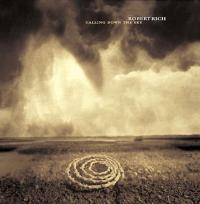
Calling Down the Sky
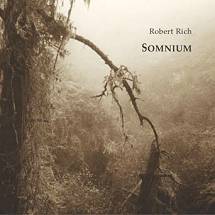
Somnium
Temple of the Invisible
Outpost Robert Rich &
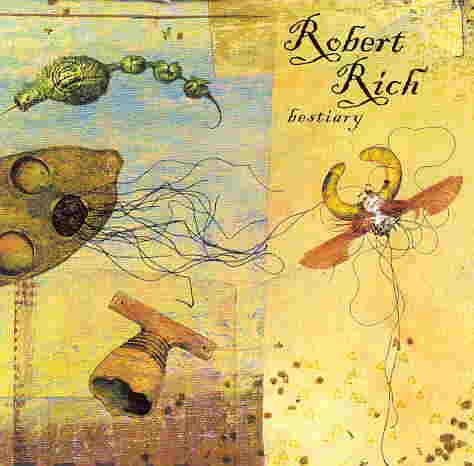
Bestiary
Sunyata
Humidity
Seven Veils
Fissures
Soma
|
Open Window: AV: When was it that you discovered music as a means of artistic communication for your own talents? RR: It was around age 11 or 12. Oddly, I thought I disliked music as a child. I remember a time when my grandfather would blast his favorite Twenties big-band jazz as a way to relax, while he and my sister tried to cajole me into dancing to it (I was maybe five?) but I didn't like it and got grumpy. I told them "I hate music" and stomped away. A few years later I started growing succulents as a hobby, and I would leave the radio on to quiet static to keep my plants happy (I was a weird kid.) I took some viola lessons in fifth grade, and sung in choir, but I didn't have a sense of the music that I heard in my head. I never thought I was a talented musician, and I didn't want to learn. However, I started improvising on my parent's piano because I wanted to hear the sound of the sustaining strings. I just droned on keys that sounded good together. I began searching out music that had the intensity that I wanted, the droney sound that created a mental focus. As time went on, I had to learn more combinations that sounded good, because the few that I knew were getting boring. I met some high-school guys that were playing in a progressive rock band and I offered my services to provide a laser light show (another hobby of mine involved building laser projectors.) I found some synthesizer kits at age 13 and started building a primitive synth system. At the time I prefered the abstract sounds that these instruments made. I slowly discovered a voice that involved drone and cloudy texture, overlayed with high frequency "critter noises" like the night sounds I so loved while growing up. It only started resembling music after quite a few years of experimenting. AV: Tell me about some of the homemade acoustic and electronic instruments that give voice to your musical talents and why homemade instead of off the shelf instruments? RR: The answer to the question "why homemade" started out financial but ended up aesthetic. In the beginning, I funded my musical experiments with paper route and gardening money. Even $300 seemed unreachable at times. The only synth I could afford at age 13, I assembled from PAIA kits over two years. It sounded awful but taught me the essentials of synthesis. In 1980 I bought an $80 lap steel guitar from a pawn shop so I could experiment with alternate tunings (I was a fan of gamelan, Harry Partch and Terry Riley.) I found a used tape-echo that employed 8-track cartridges, and I bought a better spring reverb than the one in my PAIA. The upside is that I had to invent a synthesis vocabulary that could hide the fact that my equipment sucked. I soon realized that I couldn't get the PAIA sequencer to sound like Klaus Schultz's Moog or Terry Riley's fingers, because my PAIA wouldn't stay in tune. So, I found ways to use it for triggering semi-random "critter" events. I came up with a "theory" of self-determinate synthesis (inspired by John Cage obviously) trying to get the modules to interact in chaotic random ways. The result was a vocabulary of insect noises, "glurps," organica and such. By accident I had found my voice. Now, as time has unwound to the present, I retain a desire to find the sound that's in my head, and much of the equipment doesn't guide me to my home-sound. So I continue to find it easier to build some things rather than search around for the right sample library that contains the "thing I heard in my head." My interest in just intonation has definitely augmented this quirk, since many of the interesting timbral engines don't allow control of tuning. It's constantly a source of frustration for me, and has continuously steered me away from some of the synthesizers that I would otherwise love to use. The sound of pure intervals just seduces me, and I can't work without that sound. So I still make a lot of acoustic instruments (modified guitar-like or metal feedback systems and PVC flutes mostly.) The irony is that my quirky fussiness about what sonically interests me, has led me into a somewhat lucrative side-job of sound design for new synth presets. Growing up with a modular synth vocabulary definitely helps when I want to create a new sound from scratch, and some synth makers like my approach to organic synthesis. I'm good at pushing synths into places where they become nonlinear, finding the "nice" ways to break things. AV: What was it that drew you to electronic music instead of some other genre? RR: I grew up with sounds in my head that didn't fit the orchestral repetoire. Frogs and wind, ventilation shafts and rubber bands, scratching leaves and dripping water. That made more sense to me than violins, oboes, or rock guitar. Then when I heard other composers working with pure sound (like Annea Lockwood, Marianne Amocher, and of course John Cage) I knew that music meant more than just dots on a page - it spoke a language of pure sound, and I wanted to make sounds that invited people to listen more deeply. AV: Did you ever have any formal training in music and how important is having or not having this training in the overall scheme of things for a composer of ambient music? Tell me about the time that you spent at Stanford's Center for Computer Research in Music and Acoustic. RR: I started with formal training while trying to learn viola in 5th grade, then I realized that I had been using my ear to memorize the songs (cheating and looking at the fingering of my neighbor) and that I still couldn't sight read. Singing in choirs, also, I memorized. Music notation just didn't click with me. Maybe I'm "notation dislexic" or something. I think the most important thing is to have a sound in your head, an idea, pure music. The training helps you communicate this to other people if you share their language. I learned the direct language of tape and electronics because that's the way my mind worked. I got into CCRMA through a ruse. CCRMA was a graduate-only class at Stanford, and everyone was expected to have some classical training, unless they were computer scientists or from the Speech Lab (an affiliate.) I scheduled a meeting with John Chowning, the founder of CCRMA and inventor of FM - his approval was the only way an undergrad could get accepted into the class. He asked me about my background in music, so I gave him copies of the three albums I had recorded up to that time (Sunyata, Trances, Drones.) He looked at them, handed them back to me and said, "Oh, no problem, I didn't realize you had recordings out. By all means, we would love to have you." That was all. He didn't even ask about my training. I will always respect him for that! Ironically, I didn't make much good music at CCRMA, only some just-intonation tuning reference tones and a few cool stochastic rhythms. I couldn't get around the cumbersome interface of a command-line terminal (programming in a superset of FORTH called SAIL (Stanford Artificial Intelligence Language, with endless parentheses around all the loop commands,) when I could go home to my dorm room after class and start up my cheesy synth rig, and record something more satisfying onto my cassette deck. Actually, by that time I had saved up enough money to buy a Revox B77 half-track 1/4" reel-to-reel and a Sequential Prophet 5 (rev 1, one of the flakey ones returned for upgrade and sold cheap to employees. I remember the good ones sold for at least $3500 and I payed $450 for this reject, on the promise that I would fix it myself and never take it to the factory for repair.) AV: Your first CD Sunyata came out in 1982. Tell me about the music that was on this CD and where you were at in your musical evolution at this point in time. RR: I was a freshman in college. I was listening a lot to experimental soundscape composers like Pauline Oliveros, Annea Lockwood, Marianne Amocher (all women, interestingly) along with John Cage, Terry Riley, Bill Fontana, and a few other people making music out of environmental sound. I was interested in shamanism and altered states of consciousness (although I had not yet taken psychedelics.) Also I had influences from German space music (especially Popol Vuh and Cluster) and early Industrial music like Throbbing Gristle and Caberet Voltaire. The result was a desire to induce altered states through pure sound, to create a sort of energized drone that wasn't exactly music, which one might forget, but which could permeate the room and change one's state of mind. I thought of drugs as a metaphor for this experience even though I hadn't tried them yet. I knew from personal experience what altered states of consciousness could do without drugs (I would journey often in my natural mind) and I thought that this could be a beautiful form of expression; or perhaps better stated in retropect: I tried to create the pure sound that could best express the beauty that I experienced when journeying inside. So, I tried performing concerts that lasted all night, inviting people to sleep while the music played. It made sense to me, to create an energized space late at night, where people weren't expecting "entertaininment" but perhaps they would join my interest in pure sound environment. AV: Were you happy with the way this release went as far as sales goes and the feedback you received from your listeners? RR: I didn't expect much. I had very little feedback from listeners at firs. I was extremely happy that Ethan Edgecombe of Fortuna chose to carry Sunyata, and sold most of the first pressing. Stephen Hill played most of the album on Hearts of Space. Ironically, Trances and Drones didn't get much of a response until several years later; and then they became retrospective classics almost a decade later, when I remastered them and they came out on CD. I find it amusing and somewhat gratifying that Trances/Drones now defines my "sound" for many people. Ironically, I didn't feel like anyone heard them when they came out. Until about 1989 I felt like I was playing in the dark. AV: Was the next project that you decided to release on CD easier than the first since you now had some experience as to what was going to happen to draw upon? RR: Well, perhaps, but I wasn't thinking about CD's for quite a while. I just kept making music, although I didn't know if people wanted to hear what I wanted to hear. The equipment always created a financial challenge, and my own interests in improving my skill made everything take a bit longer. I didn't think in terms of "CD" until around 1988. I released an LP "Numena" and a cassette "Inner Landscapes" before ever thinking about CDs. Numena came about because a fan from Sweden (Hans Fahlberg) decided he wanted to start a label, and asked me if I would make some music for him. The first release I had with him came about almost by accident, called "Live", with some tapes I didn't plan to release of concerts from 1983. I felt that he was starting a good thing, so I recorded "Numena" for him in 1985. It came out on LP in '87, and again in France on CD in '89 on Serge LeRoy's Badland label. By that time I had finished Geometry (which didn't come out until 1990, when Serge LeRoy worked for Spalax and got it released, despite the fact that it was a few years old) and I was presenting the rough mixes of "Rainforest" to Stephen Hill at Hearts of Space, not knowing that he would make such a big success with it. AV: Why were a lot of your recordings until 1989 released in Europe? RR: Because not very many people seemed interested in my music in the USA at the time. My first reviews came in USA fanzines like OP and Eurock (and UK's Audion aamong others,) but mostly Europeans seemed to be reading these. I really felt like I was working in a vaccuum. When I met new friends in California like Steve Roach and Michael Stearns during the '80s, I felt like I met cousins who shared common struggles finding an original voice in the shadow of '70s Berlin space rock. They found a larger audience amidst '80's "new age" marketing, which didn't click with my post-industrial mentality. I was the younger among them, but happy to find like-minded family. AV: Tell me about your relationship with Fathom/Hearts of Space and the music that you released while on that label. What was it about your work while you were there that it gathered such critical acclaim? RR: The critical acclaim perhaps came from "right time right place"; but another fact is that for a short time HOS managed to build a bit of a caché among the press. To put it straight: I always made the music I heard in my head, and for a ten year period of time it meshed with what Stephen Hill wanted to release, and with what a few of their good employees succeeded in selling to the retail world. Stephen Hill knew my music since I was a teenager in 1980, sending him cassettes, which he played on his radio show. He was immensely supportive. He started his own label several years after I began releasing albums in Europe, but for a few more years he felt my music was not commercial enough for what he envisioned. Despite our stylistic differences, I respected him immensely for supporting me and promoting my carreer. I always felt that he respected me, even when I created music that we knew he couldn't sell to the mainstream. I created "Rainforest" on my own, an expression of despair and respect for our planet, not knowing if anyone would want to release it. He loved the album and promoted it better than I ever would have known how. That put me on a bigger map than I ever expected. Later, Steve Roach and I kept trying to convince Stephen Hill that he should start a sub-label to differentiate our more intense music from the more melodic side of HOS (which we didn't like so much, but which probably made more money than our edgy "tribal" spacemusic.) Personally, I never felt a need to part company with HOS. They simply wanted to release music that didn't mesh with my direction. In the time since Valley Entertainment bought HOS, our relationship remains cordial, however I still don't know whether they provide a service that fits my changing directions. We remain in contact discussing these things, cordially, but with an awareness of the changing markets. AV: Oftentimes in popular music it is looked upon as almost obligatory that the artist do a tour to support a new release. How do feel about touring and taking your music on the road as an ambient performer and what are the challenges that you face to be able to put on a show that faithfully recreates your music but at the same time injects a live quality to the whole thing? RR: I enjoy performing, and my career has always had a performance component. I think that's the one place where I can communicate some of the shamanic, energetic qualities of the music. However, I don't generally think in terms of "touring to support an album." In fact, I occasionally assemble tours oround ideas of fresh improvisation, in hopes of coming up with some new approaches, new material. Often the new album follows the tour, like "Calling Down the Sky" did. I find that live performance can energize me, that it actually reconnects me with the purpose of making music. I can get a bit dry just hiding in the studio years on end. Then there's the problem of how to perform this music. I think the most successful concerts retrospectively are those where I totally improvise, when I don't attempt to perform pieces that I have already recorded. However, a few of my older pieces do lend themselves to live playing, using MIDI to assist me with the extra parts. Those pieces can energize an audience and they communicate a lot, but I do wonder sometimes about the validity of the "performance" concept when so much is pre-arranged. It can feel a bit like kareoke if one isn't paying attention. I'm not enchanted by the "DJ approach" - I like things to be as live and played as possible. So, these aren't trivial concerns. AV: You've done your share of joint projects over the years. What is there that you gain by doing these collaborations and what are the challenges of working with another musician on a new music project? RR: I generally choose to work only with people whom I like as friends and feel we would enjoy each other's company during the often intense time of collaboration, plus to stay friends during the lifetime of the release - it's a bit like having children. I really enjoy the collaborative process. I find it easier than solo work because there's someone to bounce ideas around with. People tend to steer each other out of corners when working together. The process is usually faster, and the albums often have a freshness that derives from new combinations. Some of my collaborations count among my favorite releases because I can listen to them with less ego identification. That's very refreshing for me. AV: You've performed in some pretty interesting places over the years. Could you tell me what places that you enjoyed playing in the most and why? RR: My fondest memories of tours and concerts center around the people I meet, because they're what make a place special. For example, the trip Steve Roach and I took to San Sebastian, Spain in 1992, was especially memorable for the warm Basque hospitality moreso even than for the beautiful 500 year old abby we performed in. We fondly remember being swept jetlagged from the airport to a cider house for a late night of eating and drinking in a place that looked like a scene from a Breughel painting. Most of the concert organizers start as fans or fellow musicians and become friends during the hard work of putting on a show: people like Chuck van Zyl in Philadelphia, the krack.org collective in Louisville KY, Gianluigi Gasparetti in Umbria Italy, Allen Bogle in Memphis TN, Paxahau in Detroit, Jim Lanpheer in Denver - the list is very long! These are the people that make me look forward to going on tour. Whether a concert takes place in a black box theatre, a planetarium or some marvelous old cathedral is just icing on the cake. AV: Tell me about your sleep concerts and what was the significance of doing them back in 1982 and why the revival in 1996? RR: Well, I think I've talked endlessly already about the basic idea of a sleep concert. People can read the extensive liner notes in Somnium or on my website. It's an all-night soft flow of cloudy abstract ambience that hopefully offers a vague focal point for the experience of unusual states of consciousness. I stopped performing these around 1986-7 in part because I had come down with mononucleosis and it semed to have eradicated my ability to pull all-nighters. These really were exhausting for me. Furthermore, I never felt totally satisfied by the choice of environments available for 40-60 people to spend all night in sleeping bags. The whole thing just didn't fit the available resources. Then, in 1995, a radio DJ on KUCI in Irvine CA named Dan Bremmer contacted me to ask if I would like to try doing a sleep concert on the radio. It seemed like a worthwhile experiment. We even had a small live audience camped out in the studio. I was quite happy with the results, so I mapped out a tour for the following year, putting on free radio sleep concerts around the country while playing normal shows to fund the trip. The radio concerts worked well because I could take breaks more easily, and treat it more like a hybrid between DJ and live. This also was a sort of testing ground for the long project that would become the 7-hour Somnium DVD. AV: You've also done some film work in your career. What is that experience like in comparison to the work you normally do on a CD in your studio? RR: My work on Hollywood films has mostly just involved sound-design, primarily for Graeme Revelle on "Pitch Black" and more often for my friend Paul Haslinger, such as on "Crazy Beautiful" "The Girl Next Door" and "Behind Enemy Lines." These are brief and pleasant jobs, usually where Paul calls me on the phone describing a scene where he can't find the right sound for the mood. He explains what's in his head and I try to give him what he wants. It's perfect work for me, because I don't have to deal with the politics of Hollywood, just with people I know and trust. In the last few years I scored two small independent films, a documentary and a short art film, both by a film professor at Santa Clara University named Yahia Mehamdi. Actually, his documentary "Thanks for Your Patience" received some attention in California last year because it makes a direct attack on the workers' compensation health insurance system, interviewing people with chronic illness who have slipped through the cracks and often become homeless. It's powerful stuff. Yahia is very easy to work with, because he came to me as a fan and often uses my music for a temp track. I tend to make the film music more simple, more sparse than I would for a studio album, because the music has to subsume itself under the picture. AV: Your last project that came out in June of 2004 was called Open Window. Tell me about this project and why it is that you chose to put out an acoustic piano CD at this time. RR: Perhaps it would be more exact to explain why I didn't release a solo piano CD earlier. I have been playing piano for 30 years, but I felt that the genre of solo piano recording had already become saturated, filled with names that I respected immensely, like Keith Jarrett and Terry Riley, but also with saccharine melodic new age piano albums that had poisoned many people's expectations. I preferred to keep my piano playing for myself, a sort of refuge from always recording my music, just relaxing spontaneously with this instrument that made me feel most at home. I continued to play piano during concerts when a good piano was available. On the last few tours, people often came up afterwards and asked if I had any releases of my piano music, and I would have to say no. I finally decided I should make a pure piano album so I could say yes. I wanted it to be small and intimate, with the crisp familiar sound of my baby grand rather than the more intense sound of a concert grand in a big hall. I also wanted to avoid the effected "ambient piano" approach that people often use, harkening of course to Budd and Eno. I just wanted to show the music in it's purest simplicity. AV: What kinds of responses did you get from your listeners and the reviewers? RR: The responses have been really positive among those who hear "Open Window"; but it hasn't gotten as much attention as I had hoped. People remark along the lines of, "I didn't know what to expect from a Robert Rich piano album. I didn't expect it be be this good!" Hopefully more people will give it a close listen. AV: What role has the internet played in spreading your music to listeners around the world? Do you enjoy the immediacy of responses via e-mail that allows your listeners to contact you directly? RR: I definitely enjoy the direct contact, although it can take a huge chunk of time. I seem to spend half my day or more doing email. Like any technology it can be a blessing and a curse. But it's a lot more effective than writing letters! The ability to spread worldwide at the click of a mouse gives an independent artist like me an unprecedented reach to the somewhat diffuse fanbase that this music has. It helps to create a sense of community and makes direct contact more feasable. Also, as the record-label business model falters, direct website sales by artist to listener fills a growing gap, and makes it possible to survive on reduced sales. That allows me to experiment more freely with my directions, to take greater risks, and still maintain my independence. AV: Do you enjoy the business end of making your music available, publicizing it, selling it etc. ? RR: I think it's important and healthy for artists to take control of the business aspects of their own careers. It's the part of the job that feels like a "job" -- far from the joy of creation, but I can think of no other way to manage my life. It gets tedious sometimes, I often get so busy tying loose ends with people that I don't get enough new music done; and when I do enter creation mode I probably allow the business side to fall away a bit too much. But I see it all as a whole, different facets of the overall process of creating and trying to disseminate something that I hope has some substance. The best way for me to make sure it retains substance is to keep track of the many facets of the process. AV: Sometimes I think that those of us who are non musicians think that you as an artist do nothing but create music 24/7. Typically how much time during a regular day when you are in the middle of a new project do you spend actually composing, mixing or recording your music? RR: Each day is different. If I'm on a roll I might spend 12 hours in the studio on a single day, especially in the midst of a project (which is usual). Other days, I might go in for a few hours in the late morning, then go for a walk downtown to do errands, come back and do a few more hours in the afternoon. Sometimes I avoid the studio entirely, on days I have to get business done or if I can't think of what to do musically. I try not to become a workaholic. AV: Do you ever have times when nothing seems to come in regards to your music? What do you do to help break the log jam of inspiration and get things moving again? RR: I certainly get into dry spells. Most artists do from time to time. I tend not to fight those moments, and just go off to do other things. I have a long list of projects around here for off-hours: office work, gardening, winemaking, culinary projects, writing and such. I spend a lot of time procrastinating. It's hard for me to start a new project until I form a model in my head of the effect I want it to have. (Writing answers to interview questions works well for this of course!) But then, usually I have a few nascent ideas bubbling in the background, so I always have something to work on if feel the urge. AV: When you look back on the works that you have put out there up to this point do you see any milestones for you musically speaking? Not a which do you like best but more of a what releases marked major shifts in your style or direction when compared to your entire body of work. RR: Numena felt like a big push forward back in 1985. I discovered several techniques during that recording that serve me well to this day. That album contained the keys to much of my future efforts trying to merge organic with electronic sound. Troubled Resting Place also involved some breakthrough experiments for me, where I found a new vocabulary in chaotic feedback systems and some interesting ways to warp organic sounds. That whole period of my work, including Stalker, Below Zero and Humidity, explore some of those techniques. I also really like the electronic vocabulary of Bestiary, which felt like a totally new world for me; but also a return to the type of sound that pulled me into electronics in the first place, only with much better equipment that allowed me to push the sonic vocabulary much further. I had a lot of fun making that album, and I hope people hear the humor in it! AV: Are there any aspects of ambient music that you haven't explored yet but would like to in an upcoming release or project? RR: I don't really think in terms of "aspects of ambient music" since I don't think in terms of categories or styles. I just have various projects that I want to try, specific textures or modal ideas in my head that I want to make into sound. I suppose, though, that my head moves in certain directions. For example, I would love to do another Amoeba album with Rick Davies, with a more pulsating heavy electric sound than our last one. It probably won't sound very "ambient," but that project's been stewing for three years now, and we haven't started it because he lives 1000 miles away and we both get very busy. I also want to do another extreme analog sound-design album like Bestiary, with a bigger blend of the dissolved and melted sound of Below Zero. At the moment though I've been in a melodic mood. AV: Tell me about where ambient music is headed in the next few years? Do you see it expanding its listener base in the coming years? RR: I think it'll always be a fringe category. It starts out in the underground, and occasionally overlaps into a slightly larger subculture; but even still, the really psychoactive juicy slow stuff rarely crosses over much into other audiences. Occasionally some artist might manage to slip something good across to a different audience, whether it's perceived as psychedelic, new age, industrial, techno, goth, or whatever, but the slow stuff usually just appeals to a minority. I think most of us who pursue slow music just make sounds that please us. I don't think of it as a style or a movement. I imagine slow music progresses as new people become attracted to textural sounds, or as us old farts try new things. It's a sound that some of us get in our heads that we want to hear, an environment that suits us when it fills the room. It will keep changing with new generations, and it will keep cycling back on itself. AV: Do you have any projects in process that you might want to hint at to the readers of Ambient Visions coming up in the next year or so? RR: I'm thick in the middle of several projects now, recording two CDs at once. The first is a collaboration with a close friend David Agasi, a photographer who lives in Tokyo right now. It's called "Echo of Small Things". He'll provide about 100 each of 10 handmade black and white prints, while I provide a CD of music to combine into a limited package that we'll release in a special box. I'll also release the CD in a standard package with the photos printed in the booklet. The music is very environmental, with slowly moving textures and a somewhat detached mood. The other project is called "Electic Ladder", a bit like old-school cyclic electronic music, with a big dose of the minimalist vocabulary that influenced me a lot when I was younger. It involves a blend of faster melodic cycles and percolating rhythms, the usual atmospherics and lots of intricate examples of just intonation. It's a rather complex project, and I'm also pondering doing a surround mix for possible DVD release later on. I'm hoping to be able to perform some of this new material in 2005 on tour, in the meantime I'm still writing and recording. Furthermore, in April, Ian Boddy plans to come out to visit from England for a couple weeks, and we'll start work on a new collaboration for his DiN label. then I'm hoping to tour in Autumn. I also have a concert coming up in San Francisco on June 11. It's a very busy year! AV: After spending so many years in pursuit of your music do you ever foresee a time when you will hang up the ambient music and retire somewhere further down the road? RR: I'm already retired. This is what I'm doing for fun. Some old men turn their garage into a woodshop and make furniture. I merely anticipated myself and turned mine into a studio, so I sit here and make albums. My problem is that my hobbies keep turning into full time jobs! If I ever do stop making records, it'll probably just be some other hobby that demands too much attention and sucks up all my time. Maybe I'll be writing a book or building sound sculpture or something. AV: During most interviews there are things that an artist would like to talk about but doesn't get asked. Is there something that you would like to share with AV's readers that didn't get covered in the interview but you'd love to talk about anyway? Now's the time. RR: I've been thinking a lot in the last few years about the role of art in culture, and the strange path pushed by our technological and info-based materialist culture. I'm attracted to something very different from the things that our media tells us we should care about. I am trying very hard to gain a better understanding of the toxic affects of materialism, trying to come up with something that's more life affirming. Our culture helps determine for us what we think is important and what we think is trivial, what is large and what is small. Yet as I reflect upon the things that make life meaningful, they often appear at the periphery. Life happens between the cracks, in the soft-hued colors of the mundane, the accidental: a casual smile, the cycle of seasons, the view from a window, growing a garden, the smells and fabrics of home. Increasingly, as time passes, I value the everyday moments in life more than the grand statement. As an artist I try to reflect the beauty and depth of those small things that we stop seeing. I want to create experiences that heighten our attention through rarification, to subtract until I can expose the essence of something. I don't know how well this translates in terms of music, so I try to carry this goal through to the other activities in life, by trying to be kind to the people around me and to the environment I live in, or through whatever small action I might be capable of. I don't excel at the grand gesture, so I try to accomplish things through small actions. It's all part of finding meaning in an increasingly noisy world. AV: Thanks Robert for a wonderful interview and for sharing so much with the readers of Ambient Visions. I hope that your retirement goes on for quite some time and that you never get tired of creating the music that we all enjoy so much. Take care and good luck with what you currently have on your plate. |