|
Mario Costa is a prolific, yet largely unknown and obscure,
Italian ambient artist who has come to my attention via a number of releases
under a variety of pseudonyms. Costa has
recorded as the unheard by me Sistrum, the somewhat Zoviet*France-sounding
Tumulus Seraphim, and the extremely environmental and trippy Sostrah
Tinnitus. This mysterious ambient
project has so far yielded two LPs, a self-released EP, and at least one more
album on the way soon. Lest I become
swamped by Costa's prolific release schedule, on toward the review of Sostrah
Tinnitus's two terrific albums.
The first of the duo is Les Débris De
L’été, released on the black/extreme metal label Beyond
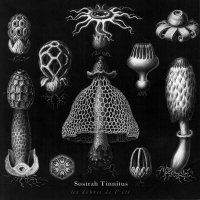
Productions. First glance at the cover reminds
me of the Hic Sunt Leones label, most specifically the psychoactive works of
Alio Die; an appropriate imagery because Sostrah Tinnitus dwells in the same
mystical environments as Stefano Musso's excellent projects. The album begins with "Oozëë," a track
extremely similar to Musso's fantastic Incantamento album,
right down to the chittering insects that serve as a droning accompaniment to
the various tape, synth, and sample manipulations that follow. Processed percussion, bells, chimes, and other,
more inexplicable, sound effects create a zone of true ambience. Next, "Post_deflagration Tinnitus"
offers a more ghostly sound, with echoed spoken dialog (as if from an old
foreign film) and spectral drones that border on creepy, as though a Mario Bava
soundtrack were filtered through early VidnaObmana. Stunning stuff. "Underwater Impression," a dark but
vibrant dronescape, conjures up the deep sea impressionism of
Biosphere--processed shakers extended into shimmering washes of sound. "Smell of Moisture After the Rain"
is perhaps the most representative track on the album: lovely off-kilter piano notes are played
amidst a rain-swept, lo-fi atmosphere, birds chirping, strange environmental
effects, and a surprising, moaning drone that threatens to eclipse all in white
noise. Tangerine Dream seems to enter
the field of vision with Rubycon-like sweeps, and by this
time you are absolutely in love with the album, without having heard the rest of
the tracks. "Infinite Colonie di
Cirripedi" plunges us into the post-industrial landscapes of early 80s
experimental music, a distant, churning soundscape that waxes and wanes
somewhat threateningly. Jeff Greinke
fans take note; this track has the same fire as Cities in
Fog, as though the landscape may be burned away by cruel progress at
any time. "Spheristerion"
begins with a processed clock chiming the hour, and continues the
post-industrial sounds of its predecessor.
One begins to feel as if time is slowing, forcibly calmed by natural or
artificial means. "Senecio"
exorcizes the ghost of the sorely-missed Voice of Eye; wildly-played percussion
and a distinctly creepy organ stabbed together, like the left-over psych
freakouts of yesteryear, channeled through a broken transistor radio. Crazy material, proving Costa's unafraid to
experiment, no matter where it leads.
The resonant territories of earlier tracks return on "Il Masso Che
si Sposta," once again recalling the earliest work of Alio Die, where
nature is manipulated and blended with the sounds of alien machinery into some
new biomechanical instrument. "Deep
Water Globular Floods" is effective in conjuring the mental images of its
title, though it's only just over one and a half minutes--rushing, alien sounds
blast over the wind-torn landscape, a vision of destruction, perhaps, but no
less beautiful than creation. Finally,
the title track, and my favorite on the album, offers a lovely lo-fi tone poem
of processed shells and other detritus mixed with the usual processed
sonics. The cricket chirps from the
first track return, bringing us full circle, ending our resonant journey,
compelling us to return to the start nevertheless. A fantastic album, and a must for fans of
early Alio Die, the darker work of Jeff Greinke, and the Manifold label.
Débris's successor
Nebra, on Gianluigi Gasparetti's Umbra label, is perhaps a
more understated work, but is no less strong.
It's also a more concentrated ambient effort, for the most part lacking
the unbridled experimentation of its predecessor. "Novena di Falene" is a beautiful
piece that reminds me of "Childhood Memories" on Oöphoi's own Time Fragments, Vol.
1. A great start,
melancholy and memorable.
"Rainlight Opaline" is an appropriately rain-swept atmosphere
that oscillates between David Tollefson-style interstellar ambience and a
hushed church ceremony of organ tones that closes the track on a gorgeous,
surprising note. Marvelous material,
dispelling the notion that ambient tracks must be over ten minutes to get
beneath the listener's skin. "Terra
Profumata per Fabbricare Vasi" inhabits the glisteningly bright zones of
Jeff Pearce or Aloof Proof--phased washes of pure vibrant harmonics. "Sun Carriage" is my favorite track
on the album, beginning with ticking clocks, and gradually opening into a
lovely, understated tonescape that reminds of the preceding track, but is far
more intense and gorgeous. For some
reason, my mental imagery is thoughts of cathedrals with lancing beams of
sunlight filtering through breaks in the roof.
Somehow Costa instills his music here with a sense of reverence, loss,
disintegration, and, above all, melancholy beauty that is singularly
wonderful. Fans of VidnaObmana's
earliest breathing synth works will be similarly impressed with Sostrah
Tinnitus's work on "Sun Carriage."
"Spore" continues the rapture, with an organ drone recalling
the brightest work of Mathias Grassow.
Strange subterranean sounds cluster around the drone, obscuring heaven
perhaps, but always vibrating radiantly above.
"Carnival" details Sostrah Tinnitus's changed demeanor on
Nebra, operating as the ambient postscript to
Débris track "Senecio"--avant-percussion conjoined
with a bright drone, a ballet of a strange, catastrophic nature. "Il Cuore Scintillante dell'Europa"
("The Sparking Heart of Europe") is the most experimental track onNebra, an eleven minute tableau of unrecognizable sounds, a
lysergic travelogue of Europe. It's utterly entrancing, though, frankly,
difficult to describe! "La Nave
della Notte" closes this memorable work, with a decayed soundtrack that
returns to Sostrah Tinnitus's Alio Die roots.
This is a fine, traditional, environmental ambient track, and a snapshot
of the best of what Costa's music has to offer.
Les Débris De L’été andNebra have earnest differences of approach, and I hesitate
to recommend one over the other. I found
them both to be of uniformly high quality, and, indeed,Nebra is likely to appear on my top ten of 2004. The strength of both albums is not just in
their consummately gorgeous, though difficult, natures--each track suprises,
making for a diverse, constantly interesting journey that never panders to the
listener's expectations. Costa's tracks
feature many mood shifts and style-switches, often during tracks that clock in at
less than six minutes. The skill displayed
here is impressive--though style-shifting quickly, the tracks never appear
disjointed, and are always marvelously composed and orderly (even at their most
chaotic).
Both Les Débris De L’été and
Nebra are marvelous examples of new, experimental ambient
music, and I highly recommend them both.
Listeners who shy away from lo-fi experimentation will want to steer
clear, however, for the recording of both albums is quite primitive. Nevertheless, each is a vastly entertaining
and often transcendent journey into mysterious, alien, and quite unusual zones
of ambience. I sincerely hope to hear a
lot more from Sostrah Tinnitus; with early albums of this caliber, we just
might have a future master on our hands.
Reviewed by Brian
Bieniowski reprinted here on Ambient Visions.
Visit Brian's
website by clicking
here. |